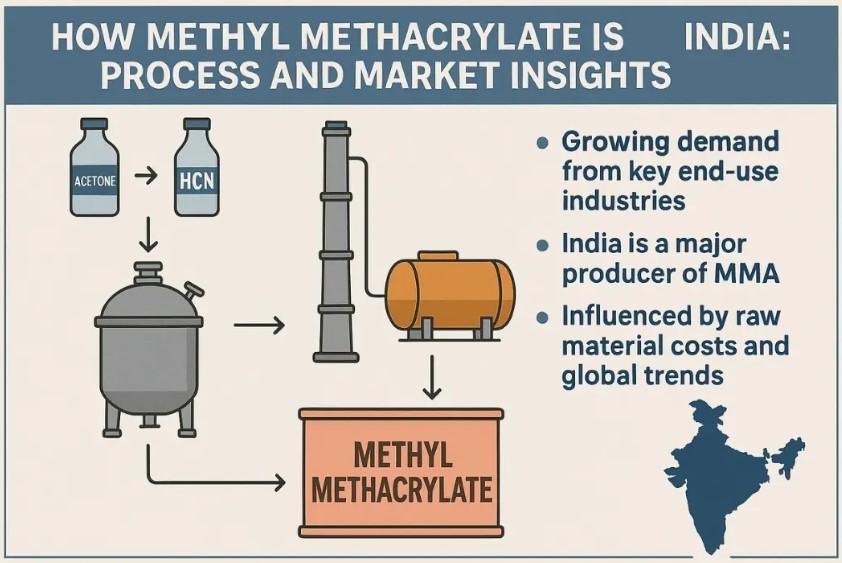
Methyl Methacrylate (MMA) is one of the most important monomers used in the chemical and polymer industries. It is the key raw material for producing acrylic sheets, coatings, adhesives, resins, medical products, and several engineered plastics. As demand for lightweight, durable, and transparent materials continues to grow, manufacturers are placing greater emphasis on efficient methyl methacrylate synthesis and advanced production technologies.
The synthesis of methyl methacrylate is more than a laboratory reaction. It is a carefully controlled industrial process that combines chemistry, engineering, and quality management to produce high-purity MMA for commercial applications. Every stage, from selecting raw materials to purification, influences the performance of the final product.
Whether you are a chemical manufacturer, industrial buyer, distributor, or engineering professional, understanding MMA synthesis provides valuable insight into how one of the world’s most widely used acrylic monomers is manufactured. This guide explains the chemistry behind the process, the major synthesis methods, and why production quality is essential for industrial success.
What Is Methyl Methacrylate Synthesis?
Methyl methacrylate synthesis refers to the series of chemical reactions used to manufacture Methyl Methacrylate from selected raw materials. The process transforms simple chemical compounds into a highly purified monomer that can later be polymerized into Polymethyl Methacrylate (PMMA), commonly known as acrylic.
Because MMA serves as the foundation for numerous industrial products, manufacturers invest heavily in research, automation, and quality control to improve production efficiency while maintaining consistent purity.
Today, MMA is widely used to manufacture:
- Acrylic sheets
- Transparent panels
- Automotive lighting
- Industrial coatings
- Protective barriers
- Adhesives and sealants
- Medical devices
- Dental materials
- Display systems
- Optical products
Its versatility makes MMA one of the most valuable materials in the global chemical industry.
Why Understanding MMA Synthesis Is Important
Many businesses purchase Methyl Methacrylate without fully understanding how it is produced. However, knowledge of the methyl methacrylate manufacturing process helps buyers make informed purchasing decisions and evaluate supplier capabilities.
Understanding the manufacturing process helps businesses:
- Assess product quality
- Compare manufacturing technologies
- Select suitable MMA grades
- Improve procurement planning
- Reduce production risks
- Ensure consistent product performance
For manufacturers, efficient industrial MMA production leads to better product consistency, reduced waste, and improved operational efficiency.
As industries demand higher quality materials, understanding how MMA is synthesized has become increasingly valuable.
The Chemistry Behind Methyl Methacrylate Synthesis
Every industrial chemical begins with a controlled chemical reaction, and MMA is no exception.
The goal of methyl methacrylate synthesis is to convert carefully selected raw materials into a stable monomer with high purity and excellent polymerization characteristics.
Although several production methods are used worldwide, the chemical process generally includes:
- Raw material preparation
- Controlled chemical reactions
- Intermediate compound formation
- Esterification
- Distillation
- Purification
- Quality testing
- Product stabilization
Each stage contributes to the overall quality and performance of the finished MMA chemical.
Because the material is later used to manufacture high-performance acrylic products, even minor variations during synthesis can affect downstream production.
Raw Materials Used in MMA Synthesis
The quality of the final product begins with the quality of its raw materials.
Depending on the manufacturing technology, producers may use different feedstocks. However, several materials are commonly used in commercial production.
Acetone
Acetone serves as one of the primary starting materials in the traditional Acetone Cyanohydrin (ACH) process.
Its purity significantly influences the efficiency of subsequent chemical reactions.
Hydrogen Cyanide
Hydrogen cyanide reacts with acetone to produce acetone cyanohydrin, an important intermediate in the synthesis of methyl methacrylate.
Because it is a hazardous chemical, manufacturers use highly controlled production systems and advanced safety protocols throughout the process.
Methanol
Methanol is introduced during the esterification stage.
It reacts with intermediate compounds to produce crude Methyl Methacrylate before purification.
Sulfuric Acid
Sulfuric acid acts as a catalyst during several reaction stages and supports the conversion of intermediate compounds into MMA.
Careful process control ensures efficient reaction performance while maintaining product quality.
Alternative Feedstocks
Modern manufacturing facilities increasingly use alternative raw materials such as:
- Isobutylene
- Ethylene
- Propylene derivatives
These newer technologies help improve production efficiency while reducing environmental impact.
Major Methods of Methyl Methacrylate Synthesis
Over the years, the chemical industry has developed multiple methods for manufacturing MMA.
Although each production route follows a different chemical pathway, the objective remains the same: producing high-quality Methyl Methacrylate suitable for industrial applications.
The most common commercial methods include:
- Acetone Cyanohydrin (ACH) Process
- C4-Based Process
- Ethylene-Based Process
Each method offers unique advantages in terms of production efficiency, operating cost, raw material availability, and environmental performance.
The Acetone Cyanohydrin (ACH) Method
The Acetone Cyanohydrin process is one of the oldest and most widely recognized methods of MMA synthesis.
For decades, it has been used by chemical manufacturers around the world because of its established technology and reliable production performance.
The process begins with a reaction between acetone and hydrogen cyanide.
This reaction forms acetone cyanohydrin, which serves as the primary intermediate compound.
The intermediate then undergoes additional chemical reactions using sulfuric acid to produce methacrylamide sulfate.
In the next stage, methanol reacts with this intermediate during esterification to form crude Methyl Methacrylate.
Finally, the product is purified through multiple distillation stages before undergoing stabilization and quality testing.
Although newer technologies have emerged, the ACH process remains an important part of global industrial MMA production due to its proven performance and established manufacturing infrastructure.
Why Production Quality Matters
The success of every MMA-based product depends on the consistency of the monomer used during manufacturing.
High-quality MMA chemical offers several advantages:
- Better polymerization performance
- Higher optical clarity
- Improved weather resistance
- Greater chemical stability
- Consistent manufacturing results
Manufacturers continuously monitor reaction conditions, raw material quality, and purification systems to ensure every production batch meets industrial quality standards.
This commitment to quality helps downstream manufacturers produce reliable acrylic sheets, coatings, adhesives, and engineered plastic products with consistent performance.
Modern Methods of Methyl Methacrylate Synthesis
While the Acetone Cyanohydrin (ACH) process remains widely used, the chemical industry has developed newer technologies that improve production efficiency and reduce environmental impact. These advanced methods support growing global demand while helping manufacturers optimize costs and sustainability.
C4-Based Process
The C4 process uses isobutylene or tert-butanol as the primary feedstock instead of acetone and hydrogen cyanide. Through a series of oxidation and esterification reactions, manufacturers produce high-purity Methyl Methacrylate suitable for industrial applications.
This process offers several advantages:
- Lower waste generation
- Improved raw material efficiency
- Better environmental performance
- High production capacity
Many modern production facilities continue investing in this technology as part of their long-term sustainability strategy.
Ethylene-Based Process
Another important advancement in methyl methacrylate synthesis is the ethylene-based production route.
This method uses ethylene-derived raw materials and advanced catalytic reactions to manufacture MMA more efficiently.
Key benefits include:
- Reduced environmental impact
- Improved process efficiency
- Better energy utilization
- Lower production costs in large-scale operations
As chemical manufacturers continue modernizing production facilities, these technologies are expected to become increasingly common.
Quality Control in Industrial MMA Production
Regardless of the manufacturing method used, quality control remains one of the most important aspects of industrial MMA production.
Every production batch undergoes rigorous testing before it reaches industrial customers.
Laboratory testing generally includes:
- Chemical purity analysis
- Moisture content measurement
- Density testing
- Color evaluation
- Stability assessment
- Polymerization inhibitor verification
These quality checks ensure that the MMA chemical performs consistently during downstream manufacturing.
Reliable manufacturers also implement automated monitoring systems throughout the production process. These systems continuously measure reaction conditions and identify potential variations before they affect product quality.
Strong quality control benefits customers by providing:
Reliable product consistency
- Improved production efficiency
- Reduced manufacturing defects
- Better performance of finished acrylic products
Environmental Considerations in MMA Manufacturing
Sustainability has become an important focus for the global chemical industry.
Manufacturers are continuously improving the methyl methacrylate manufacturing process to reduce emissions, improve energy efficiency, and minimize waste generation.
Common sustainability initiatives include:
- Heat recovery systems
- Solvent recycling
- Waste reduction programs
- Energy-efficient production equipment
- Improved catalyst technologies
Many facilities also invest in cleaner manufacturing methods that reduce the use of hazardous materials while maintaining product quality.
These improvements help manufacturers meet environmental regulations while supporting long-term industrial growth.
Industrial Applications of Methyl Methacrylate
One of the reasons MMA chemical continues to experience strong global demand is its wide range of applications across multiple industries.
A significant portion of produced MMA is converted into PMMA acrylic sheets.
These sheets are widely used for:
- Signage
- Display panels
- Architectural glazing
- Machine guards
- Retail fixtures
- Protective barriers
Their excellent transparency and weather resistance make them suitable for both indoor and outdoor environments.
MMA-based resins improve the performance of industrial coatings by providing:
- Excellent UV resistance
- Long-lasting gloss
- Weather durability
- Chemical resistance
These coatings are commonly used in construction, automotive, and industrial equipment.
The excellent bonding properties of MMA make it valuable in high-performance adhesives.
Industries using MMA adhesives include:
- Automotive manufacturing
- Construction
- Marine engineering
- Composite fabrication
Medical-grade MMA is used in specialized healthcare applications such as:
- Bone cement
- Dental prosthetics
- Orthopedic devices
- Laboratory equipment
These applications require exceptionally high-quality MMA produced under strict manufacturing standards.
How to Choose the Right MMA Manufacturer
Understanding the synthesis of methyl methacrylate is only one part of making an informed purchasing decision. Selecting an experienced manufacturer is equally important.
Industrial buyers should evaluate several factors before choosing a supplier.
Product Quality
Consistent product purity directly affects the performance of acrylic sheets, coatings, adhesives, and other downstream products.
Manufacturing Capability
Choose manufacturers with modern production facilities and sufficient capacity to support long-term supply requirements.
Technical Expertise
Experienced suppliers can provide guidance on product selection, storage, handling, and application.
Reliable Supply Chain
A dependable logistics network helps ensure timely deliveries and uninterrupted production.
Customer Support
Responsive technical and commercial support helps businesses resolve issues quickly and improve operational efficiency.
Where to Source High-Quality Methyl Methacrylate
Businesses looking for reliable MMA supply should work with manufacturers that combine product quality, technical expertise, and dependable service.
MMA Chemicals supplies high-quality Methyl Methacrylate for industrial applications across multiple sectors.
To learn more about available products and bulk supply solutions, visit:
Methyl Methacrylate Supply Services
https://mmachemicals.com/our-services-methyl-methacrylate/
This resource provides detailed information about industrial MMA supply, manufacturing capabilities, and customized solutions for businesses.
Future of Methyl Methacrylate Synthesis
The future of methyl methacrylate synthesis will continue to focus on improving efficiency, reducing environmental impact, and supporting growing industrial demand.
Several industry trends are shaping future production.
Sustainable Manufacturing
Chemical producers are adopting cleaner production technologies that reduce waste and improve resource efficiency.
Process Automation
Advanced automation systems improve reaction control, production consistency, and operational efficiency.
Growing Demand
Increasing demand for acrylic sheets, lightweight automotive materials, electronics, and medical products will continue driving investment in industrial MMA production.
Innovation in Raw Materials
Researchers continue exploring alternative feedstocks and recycling technologies to make MMA manufacturing more sustainable.
These developments are expected to strengthen the global MMA industry while improving manufacturing performance.
Conclusion
Methyl methacrylate synthesis is a carefully controlled industrial process that combines chemistry, engineering, and quality management to produce one of the world’s most valuable acrylic monomers. From raw material selection and chemical reactions to purification and quality testing, every stage influences the performance of the final product.
Modern manufacturing technologies have made the process more efficient, environmentally responsible, and capable of meeting the growing needs of industries worldwide.
Whether used in acrylic sheet manufacturing, coatings, adhesives, automotive components, or medical products, high-quality MMA remains essential for producing durable and reliable materials.
Businesses looking for consistent quality and dependable supply should partner with experienced manufacturers such as MMA Chemicals to ensure long-term production success and reliable industrial support.