How Is Methyl Methacrylate Made? Complete MMA Production Process and Synthesis Guide
Methyl Methacrylate (MMA) is an industrial monomer produced through several chemical routes, including the Acetone Cyanohydrin (ACH), C4 oxidation, and ethylene-based processes. Each route uses different feedstocks and reaction chemistry, but the final objective is the same: produce high-purity MMA for polymerization into PMMA and for use in acrylic resins, coatings, adhesives, and other industrial materials.
For chemical manufacturers and B2B buyers, understanding the methyl methacrylate process is useful for more than technical knowledge. The production route affects feedstock requirements, process economics, waste management, supply reliability, and the quality specifications that downstream manufacturers need.
So, how is methyl methacrylate made? The answer depends on the manufacturing technology. Traditional plants may use the ACH route, while other commercial facilities use C4-based oxidation or newer ethylene-based technologies such as the Alpha process.
This guide explains the major MMA production process routes, how MMA synthesis works, what happens during purification, and why production technology matters to industrial buyers.
What Is Methyl Methacrylate?
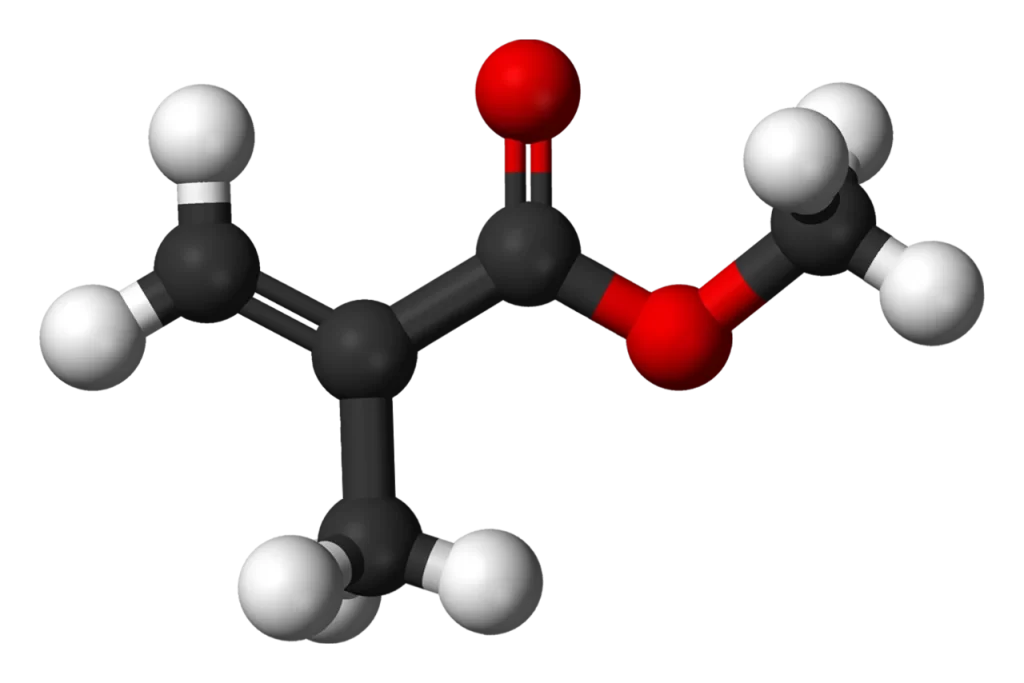
Methyl Methacrylate is a clear, colorless organic liquid with the molecular formula C₅H₈O₂ and CAS number 80-62-6. It is commonly abbreviated as MMA and is primarily used as a monomer for producing polymethyl methacrylate, or PMMA.
MMA contains a reactive carbon-carbon double bond. During polymerization, individual MMA molecules join together to form long polymer chains. The resulting PMMA is commonly used as acrylic plastic.
Important characteristics of MMA include:
- Reactive methacrylate double bond
- Clear, colorless appearance
- High polymerization capability
- Volatile and flammable liquid behavior
- Commercial stabilization with an inhibitor
- Compatibility with various polymer and resin systems
The resulting PMMA is valued for transparency, weather resistance, surface appearance, and relatively low weight.
What Is MMA Chemical Used For?
MMA chemical is used primarily as a raw material for PMMA and acrylic resin production. Its downstream applications include:
- Acrylic sheets
- Signage and displays
- Automotive lighting components
- Architectural glazing
- Protective coatings
- Adhesives
- Construction materials
- Optical components
- Medical and dental materials
This wide application base is one reason the global chemical industry continues to invest in efficient methyl methacrylate production technologies.
How Is Methyl Methacrylate Made?
There isn’t just one methyl methacrylate production process. Commercial MMA can be manufactured through several established routes.
The three major production pathways are:
- Acetone Cyanohydrin (ACH) process
- C4-based oxidation processes
- Ethylene-based or C2 processes
The chemistry differs significantly between these routes. The ACH process starts from acetone and hydrogen cyanide, C4 processes use feedstocks such as isobutylene or tert-butanol, and the Alpha process uses ethylene, carbon monoxide, methanol, and formaldehyde.
The production route ultimately determines how intermediate compounds are converted into MMA and how the plant handles separation, recycling, waste, and purification.
1. Acetone Cyanohydrin (ACH) Process
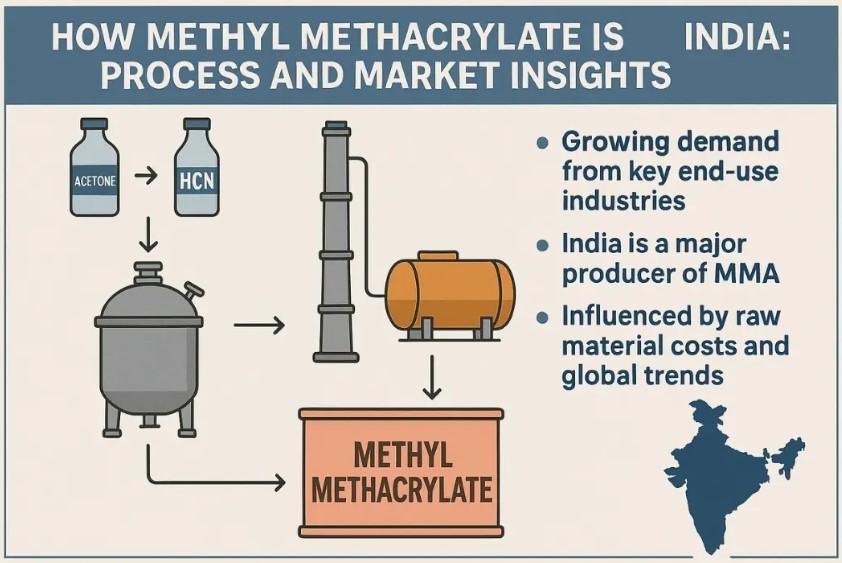
The Acetone Cyanohydrin process is the traditional industrial route for MMA production and has been used commercially for decades. In the conventional route, acetone and hydrogen cyanide react to form acetone cyanohydrin, which is subsequently converted through acid-mediated chemistry and esterification to produce crude MMA.
Step 1: Acetone Cyanohydrin Formation
The first stage combines acetone with hydrogen cyanide to form acetone cyanohydrin.
Acetone + Hydrogen Cyanide → Acetone Cyanohydrin
Acetone cyanohydrin becomes the key intermediate for the traditional MMA synthesis route.
Because hydrogen cyanide is highly hazardous, this stage requires specialized containment, monitoring, process controls, and safety systems.
Step 2: Acid Conversion
In the conventional ACH route, acetone cyanohydrin is treated with concentrated sulfuric acid. This converts the intermediate into methacrylamide sulfate.
The reaction system is carefully controlled because concentrated sulfuric acid is highly corrosive.
Step 3: Esterification
Methanol is introduced into the process to convert the methacrylamide intermediate into crude Methyl Methacrylate.
The conventional reaction also produces ammonium bisulfate as a major inorganic by-product. The management and treatment of this stream are important considerations for plants using the traditional ACH technology.
Step 4: Purification
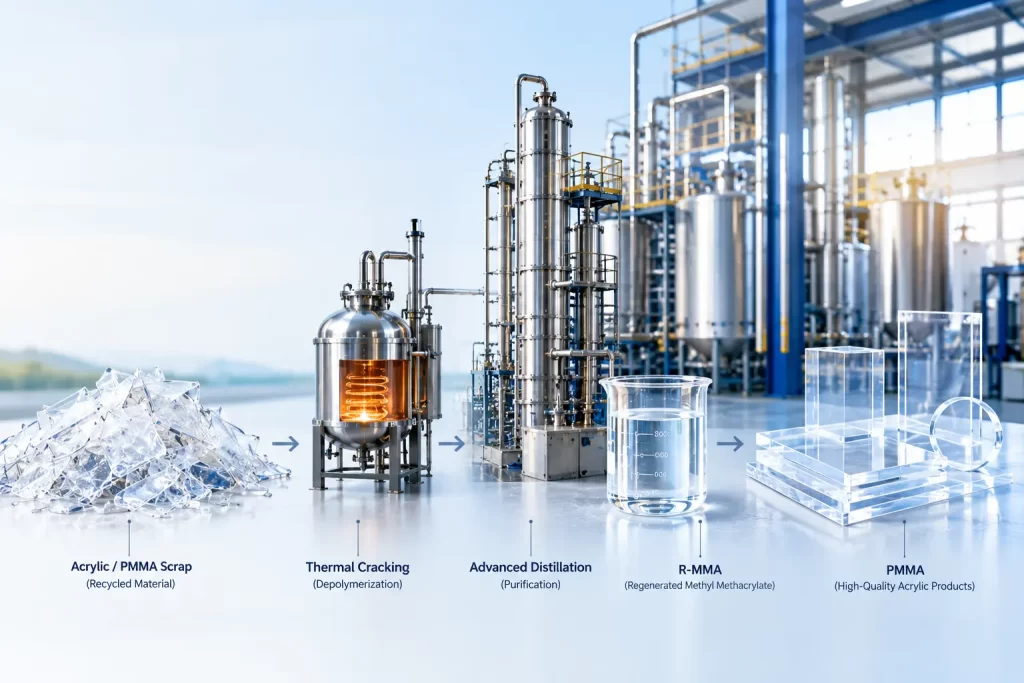
The crude MMA contains water, unreacted materials, and other impurities. Distillation and other separation operations are therefore required before the product can be supplied for industrial applications.
Purification is especially important for downstream polymer manufacturers because raw-material consistency can influence polymerization and finished-product quality.
ACH Route: Key Considerations
Advantages:
- Long-established industrial technology
- Proven large-scale production
- Well-developed process knowledge
- Established feedstock infrastructure
Challenges:
- Hydrogen cyanide handling
- Concentrated acid handling
- Ammonium bisulfate generation
- Waste treatment requirements
The ACH route remains commercially important, although manufacturers have developed alternative technologies to address some of these challenges.
2. C4-Based MMA Production Process
The C4 route provides an alternative to ACH-based methyl methacrylate production.
These processes can use C4 feedstocks such as isobutylene or tert-butanol (TBA). The feedstock is oxidized to form methacrolein and then further converted toward methacrylic acid before esterification with methanol to produce MMA. C4-based production has been commercially established, particularly in Asia.
The simplified process can be represented as:
Isobutylene / TBA → Methacrolein → Methacrylic Acid → MMA
Step 1: Oxidation to Methacrolein
The C4 feedstock undergoes catalytic oxidation to produce methacrolein.
Step 2: Oxidation to Methacrylic Acid
Methacrolein is further oxidized to methacrylic acid.
Step 3: Esterification
Methacrylic acid reacts with methanol to form Methyl Methacrylate.
Methacrylic Acid + Methanol → Methyl Methacrylate + Water
Direct Oxidative Esterification
Some C4 technologies use a direct oxidative esterification route in which methacrolein is converted directly to MMA using methanol and oxygen with an appropriate catalyst system.
This approach reduces the number of conventional intermediate isolation steps and has been developed as an alternative industrial technology.
The exact process configuration, catalyst, recycle strategy, and separation system vary by technology provider and plant.
3. Ethylene-Based MMA Production Process
The ethylene-based route is another important development in MMA synthesis.
One well-known example is Lucite International’s Alpha process. The process uses commodity feedstocks and two major catalytic stages.
Stage 1: Methyl Propionate Formation
Ethylene reacts with carbon monoxide and methanol through a homogeneous catalytic carbonylation reaction to form methyl propionate.
Ethylene + Carbon Monoxide + Methanol → Methyl Propionate
Stage 2: MMA Formation
Methyl propionate then reacts with formaldehyde in a heterogeneous catalytic condensation reaction to form Methyl Methacrylate and water. Technical literature describes cesium-containing catalysts supported on silica or related catalyst systems for this stage.
The simplified pathway is:
Ethylene → Methyl Propionate → Methyl Methacrylate
This route is commercially significant because it uses different feedstocks from the traditional ACH process and can reduce certain waste and resource-intensity concerns. Life-cycle research has identified the Alpha route as an important alternative to conventional ACH production.
ACH vs C4 vs Ethylene: Comparing MMA Production Routes
| Production Route | Main Feedstocks | Key Intermediates | Main Consideration |
|---|---|---|---|
| ACH | Acetone, HCN, sulfuric acid, methanol | Acetone cyanohydrin, methacrylamide sulfate | Established technology with significant acid and inorganic by-product management |
| C4 Oxidation | Isobutylene or TBA, oxygen, methanol | Methacrolein, methacrylic acid | Alternative feedstock route with established commercial use |
| Ethylene / Alpha | Ethylene, carbon monoxide, methanol, formaldehyde | Methyl propionate | Alternative catalytic route with strong feedstock and waste-efficiency advantages |
The best production route depends on factors such as feedstock availability, plant integration, catalyst technology, energy costs, environmental requirements, and regional economics. There is no single process that is automatically optimal for every manufacturing location.
Methyl Methacrylate Purification and Quality Control
Producing MMA is only part of the manufacturing challenge. The final product must meet the specifications required by downstream customers.
After synthesis, the crude product is separated and purified using process equipment such as distillation columns and associated recovery systems.
Quality control may evaluate:
- MMA purity
- Water content
- Color
- Acidity
- Inhibitor concentration
- Stability
- Impurity profile
- Batch consistency
Purity becomes especially important when MMA is used to produce high-quality PMMA for optical, architectural, or specialty applications.
A reliable MMA chemical supplier should therefore be able to provide appropriate product specifications and batch documentation for industrial customers.
Why the MMA Production Process Matters to B2B Buyers
For a procurement team, understanding the methyl methacrylate process can provide useful insight into supply risk.
Different production routes depend on different feedstocks. This means changes in the availability or cost of acetone, hydrogen cyanide, C4 hydrocarbons, ethylene, methanol, formaldehyde, or other inputs can affect production economics.
Buyers should therefore consider more than the quoted price per tonne.
Important procurement factors include:
- Product purity
- Consistent batch quality
- Required inhibitor level
- Packaging or bulk delivery
- Production capacity
- Lead time
- Technical documentation
- Storage requirements
- Supplier reliability
A stable supply relationship can be particularly important for manufacturers running continuous acrylic or polymer production.
What Is MMA Used For?
The question “methyl methacrylate what is it used for” is closely connected to the production process because the required quality can vary according to the downstream application.
MMA is used in:
PMMA Manufacturing
MMA is polymerized to produce PMMA, which is used in acrylic sheets, displays, glazing, optical products, and fabricated components.
Paints and Coatings
MMA-based acrylic resins can provide useful combinations of weatherability, gloss, hardness, and surface performance.
Adhesives
Methacrylate-based adhesive systems are used for demanding bonding applications involving metals, composites, plastics, and fabricated components.
Automotive Products
MMA-derived materials are used in lighting components, transparent parts, interior components, and other applications where optical quality and durability matter.
Construction
Acrylic materials are used in architectural panels, signage, glazing, protective barriers, and construction-related products.
Medical and Dental Materials
Specialized MMA-based formulations are used in certain dental and orthopedic applications, subject to appropriate grade and regulatory requirements.
How Is MMA Made: A Simple Process Summary
For readers who want the short answer, how is MMA made can be summarized as follows:
Feedstock Selection → Chemical Synthesis → Intermediate Formation → MMA Formation → Separation → Purification → Stabilization → Quality Testing → Industrial Supply
The exact chemistry depends on whether the plant uses ACH, C4, or an ethylene-based route.
This distinction is important because MMA synthesis is not a single universal reaction. It is a family of industrial technologies designed to manufacture the same commercially important monomer.
Choosing a Reliable MMA Chemical Supplier
Industrial buyers need more than a product name when sourcing MMA.
A reliable supplier should understand the customer’s application and be able to discuss:
- Required product specification
- Quantity and supply frequency
- Packaging requirements
- Quality documentation
- Storage and handling
- Delivery requirements
- Application-specific needs
For manufacturers, consistent MMA chemicals can help reduce production variation and support reliable downstream processing.
If your company requires Methyl Methacrylate for acrylic, polymer, coating, adhesive, or other industrial applications, you can explore the dedicated MMA supply information from MMA Chemicals.
Methyl Methacrylate supply services from MMA Chemicals
Conclusion
The methyl methacrylate production process involves advanced chemical reactions, catalytic conversion, separation, purification, and quality control. Commercial manufacturing can follow different routes, with the ACH, C4, and ethylene-based processes representing important industrial approaches.
The traditional ACH route uses acetone and hydrogen cyanide to form acetone cyanohydrin before further conversion to MMA. C4 processes use feedstocks such as isobutylene or tert-butanol and convert them through oxidation chemistry. Ethylene-based technologies such as the Alpha process use ethylene, carbon monoxide, methanol, and formaldehyde through catalytic stages to produce MMA.
Understanding these differences helps chemical buyers evaluate supply reliability, product quality, production technology, and long-term procurement requirements.
Whether you search for methyl methacrylate process, methyl methacrylate synthesis, MMA production process, methyl methacrylate production, MMA synthesis, how is methyl methacrylate made, or how is MMA made, the underlying answer is the same: MMA is produced through carefully engineered industrial routes, followed by purification and quality control before it enters downstream manufacturing.

Frequently Asked Questions
Methyl Methacrylate is made commercially through several production routes, including the ACH, C4 oxidation, and ethylene-based processes. Each route uses different feedstocks and chemical intermediates before producing and purifying MMA.
The production process generally includes feedstock preparation, chemical conversion, intermediate formation, MMA formation, separation, purification, stabilization, and quality testing.
The ACH process is a long-established commercial route and remains important globally, although C4 and ethylene-based technologies are also used at commercial scale.
MMA synthesis refers to the chemical reactions used to convert selected feedstocks into Methyl Methacrylate. The specific synthesis pathway depends on the production technology.
MMA chemical is mainly used to produce PMMA and acrylic materials. It is also used in coatings, adhesives, automotive components, construction materials, and specialized medical and dental products.
Buyers should evaluate purity, inhibitor concentration, batch consistency, quality documentation, packaging, storage requirements, delivery capability, and the supplier's ability to provide reliable long-term supply.
Acrylic Sheet Best Uses: Applications, Benefits, and Industries
Acrylic Sheet Best Uses Applications, Benefits, and Industries Acrylic sheets are widely used as a lightweight, durable, and visually clear […]
How Is Methyl Methacrylate Made? Complete MMA Production Process and Synthesis Guide
How Is Methyl Methacrylate Made? Complete MMA Production Process and Synthesis Guide Methyl Methacrylate (MMA) is an industrial monomer produced […]
MMA Chemical & Methyl Methacrylate
Methyl Methacrylate MMA Chemical Methyl Methacrylate, commonly known as MMA, is an important chemical building block used across the plastics, […]