
Regenerated Monomers in Sustainable Manufacturing
Introduction
The global shift toward sustainability is changing how businesses operate. As a result, many industries now adopt greener technologies and eco-friendly production methods. In addition, companies want to reduce waste and lower carbon emissions.
Because of this growing demand, sustainable manufacturing solutions continue to gain importance across global industries. One popular solution is the use of regenerated monomers, especially regenerated Methyl Methacrylate (MMA) monomers.
Furthermore, regenerated MMA helps businesses improve sustainability while maintaining product quality and industrial performance. In this blog, we’ll explain the role of regenerated monomers in sustainable manufacturing. We’ll also explore their benefits and future importance in green production.
The Rise of Sustainable Manufacturing
Sustainable manufacturing focuses on reducing the environmental impact of industrial production. At the same time, businesses also want to maintain strong economic performance and long-term growth.
To achieve these goals, companies work to reduce waste, conserve natural resources, and lower greenhouse gas emissions. In addition, many industries now follow circular economy principles that support recycling and material reuse.
Furthermore, regenerated monomers provide a practical and eco-friendly alternative to traditional virgin monomers. As a result, businesses can improve sustainability while maintaining product quality and production efficiency.
What Are Regenerated Monomers?
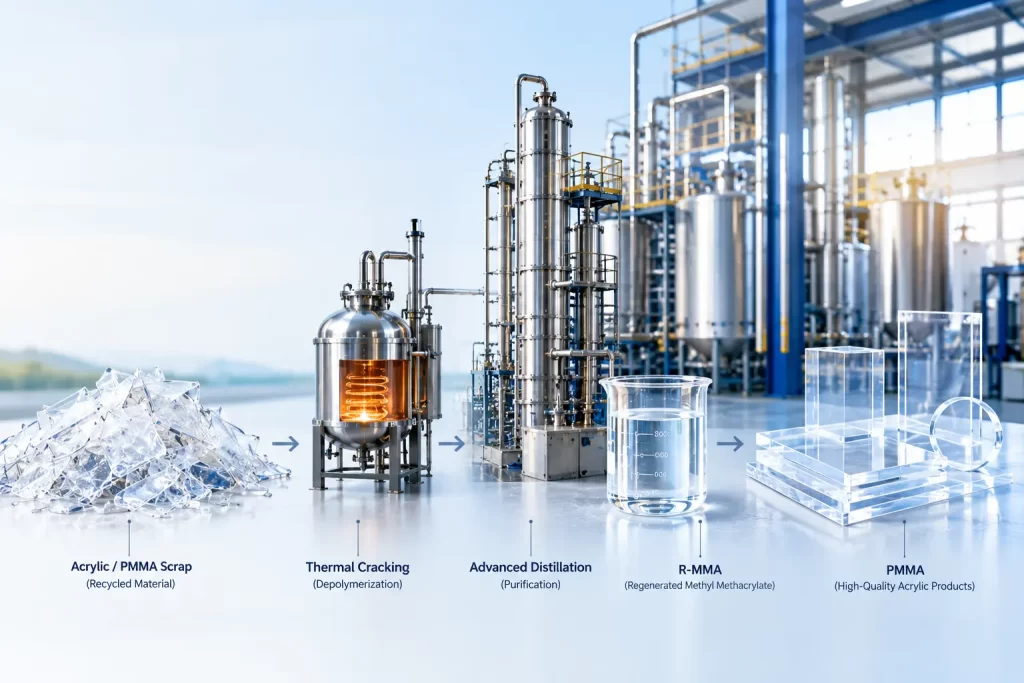
Regenerated monomers come from recycled waste materials that contain monomers such as MMA. During the recycling process, manufacturers break down and purify these materials to recover reusable monomers.
As a result, regenerated MMA delivers properties and performance similar to virgin MMA. Therefore, manufacturers can use it in many high-performance industrial applications.
Furthermore, monomer regeneration supports the principles of a circular economy. Companies can continuously recycle and reuse materials instead of discarding them as waste. In addition, this process helps reduce dependence on non-renewable resources.
How Regenerated MMA Monomers Support Sustainability
Resource Conservation and Circular Economy
One major benefit of using regenerated MMA monomers is better resource conservation. Traditional virgin MMA production depends heavily on petrochemical resources. As a result, continuous production can increase resource depletion.
However, manufacturers produce regenerated MMA from recycled waste materials. Therefore, companies can reduce the need for fresh raw materials and support a circular economy. In addition, this process helps lower the environmental impact linked to raw material extraction and processing.
Reduction of Carbon Footprint
Virgin MMA production requires large amounts of energy and generates greenhouse gas emissions. In contrast, regenerated MMA uses less energy during production. As a result, businesses can reduce their overall carbon footprint and support sustainability goals.
Furthermore, companies that use regenerated MMA can improve environmental performance while maintaining product quality and industrial efficiency.
Cost Efficiency in Green Production
Besides environmental advantages, regenerated MMA also provides important cost savings for manufacturers. The recycling process often costs less than virgin MMA production. Therefore, businesses can improve sustainability without reducing profitability.
In addition, modern recycling technologies now produce regenerated MMA with quality similar to virgin monomers. As a result, regenerated MMA has become a reliable and cost-effective option for sustainable manufacturing.
Key Industries Benefiting from Regenerated Monomers
Several industries now benefit from using regenerated monomers in manufacturing and industrial production. In addition, regenerated MMA helps companies improve sustainability while maintaining product quality and durability.
- Automotive Manufacturing: Manufacturers use regenerated MMA to produce transparent and durable components such as headlights and taillights. As a result, automotive companies can reduce waste and improve sustainability in production.
- Construction and Building Materials: Manufacturers use acrylic sheets and protective coatings made from regenerated MMA in construction projects. Furthermore, these materials support resource conservation and better energy efficiency.
- Plastics and Coatings: Manufacturers also use regenerated MMA to create high-quality plastics and coatings. Therefore, companies can increase the use of recycled materials in consumer and industrial products.
Future Trends in Sustainable Manufacturing with Regenerated MMA
As sustainability becomes more important for businesses, the demand for regenerated monomers continues to grow. In addition, many industries now invest in greener manufacturing practices and recycled materials.
Several important trends are also shaping the future of sustainable manufacturing.
- Technological Advancements: Modern recycling technologies continue to improve the efficiency and quality of regenerated monomers. As a result, manufacturers can use regenerated MMA in more high-performance applications.
- Government Regulations: Environmental regulations continue to become stricter across global industries. Therefore, businesses must reduce waste and lower emissions. Regenerated MMA helps companies meet these requirements while maintaining product quality.
- Consumer Demand for Eco-Friendly Products: Consumers now prefer products made from sustainable materials. Furthermore, regenerated MMA helps businesses meet this growing demand and strengthen brand reputation.
Conclusion: Building a Greener Future with Regenerated Monomers
Frequently Asked Questions
Here are the frequently asked questions (FAQs) that provide essential information about Regenerated Monomers in Sustainable Manufacturing
Evaluate the quality by checking key indicators like purity, physical properties, and compliance standards. Verify the supplier’s testing methods, batch consistency, and technical support.
Batch consistency ensures that each batch of regenerated MMA meets the same quality standards, reducing the risk of defects in your final products and maintaining production efficiency.
Look for certifications like ISO 9001 (quality management), ISO 14001 (environmental management), and compliance with industry-specific standards such as REACH and RoHS.
How Is Methyl Methacrylate Produced? MMA Production Process
How Is Methyl Methacrylate Produced? MMA Production Process Methyl Methacrylate (MMA) is one of the most important raw materials used […]
25 Acrylic Sheet Applications Across Industries in 2026
25 Acrylic Sheet Applications Across Industries in 2026 Acrylic sheets have become one of the most practical materials for modern […]
Methyl Methacrylate Market Trends, Demand & Future Growth
Methyl Methacrylate Market Trends, Demand & Future Growth The global MMA market continues to expand as industries increasingly adopt advanced […]