

Methyl methacrylate (MMA) remains one of the most important compounds in the global chemical industry. Manufacturers widely use MMA for producing acrylic sheets, coatings, adhesives, medical products, and high-performance plastics.
In 2026, industries continue to increase their use of methyl methacrylate because of its durability, transparency, weather resistance, and lightweight structure. Additionally, growing demand for sustainable and recyclable materials has strengthened MMA’s position across construction, automotive, healthcare, and electronics sectors.
This complete guide covers methyl methacrylate properties, applications, production methods, sustainability trends, safety guidelines, and future market developments.
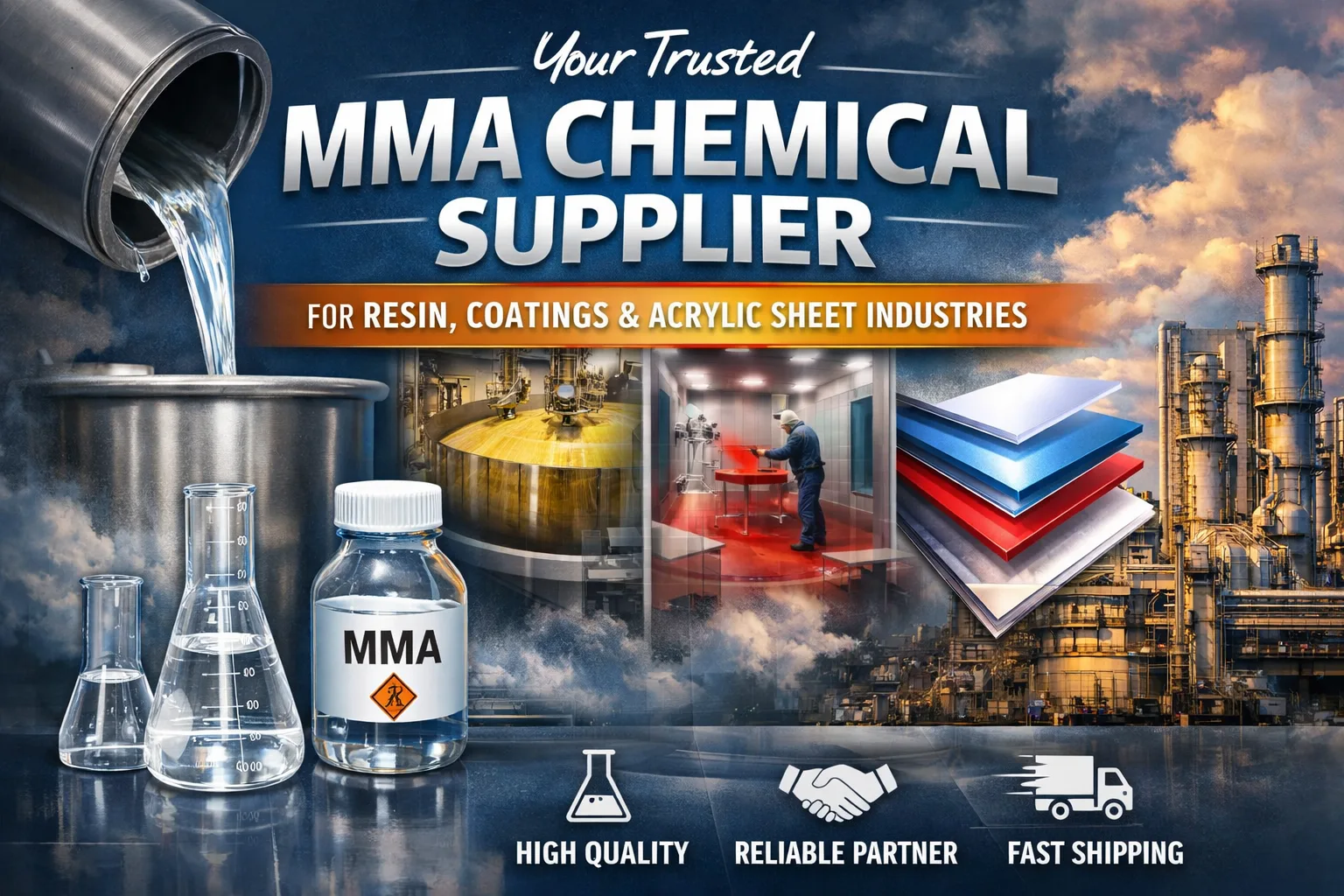
What Is Methyl Methacrylate?
Methyl methacrylate is a colorless and flammable liquid with a strong odor. Industries primarily use it as a monomer for manufacturing polymethyl methacrylate (PMMA), commonly known as acrylic or acrylic glass. MMA delivers excellent optical clarity, UV resistance, impact strength, and long-term weather durability. Because of these advantages, manufacturers rely on MMA for producing premium acrylic products and specialty materials.
Manufacturers generally produce methyl methacrylate using two major industrial processes:
- Acetone Cyanohydrin (ACH) Process
- Ethylene-Based Production Process
Although both methods support global demand efficiently, newer production technologies now focus heavily on sustainability, energy efficiency, and lower environmental impact.
Physical and Chemical Properties of Methyl Methacrylate
Understanding methyl methacrylate properties helps manufacturers select the right material for industrial and commercial applications.
- Molecular Formula: C5H8O2
- Boiling Point: 101°C
- Melting Point: -48°C
- Density: 0.94 g/cm³
- Flash Point: 10°C
- Appearance: Clear and colorless liquid
- Solubility: Slightly soluble in water and miscible with most organic solvents
These physical and chemical properties make MMA suitable for acrylic sheets, industrial coatings, specialty resins, adhesives, inks, and engineering plastics.
Top Applications of Methyl Methacrylate
1. Construction Industry Applications
The construction industry extensively uses methyl methacrylate in acrylic sheets, skylights, protective barriers, windows, architectural panels, and signage systems.
Leading acrylic sheets manufacturers and suppliers in India depend on high-quality MMA because it provides excellent UV resistance, weatherability, and durability.
Similarly, many acrylic sheet manufacturers in India use premium-grade methyl methacrylate for long-lasting acrylic production. Additionally, MMA-based flooring systems and road marking solutions offer fast curing and superior durability for heavy-use environments.
2. Automotive Industry Uses
Automotive manufacturers use methyl methacrylate for exterior lighting covers, instrument clusters, trim panels, and lightweight vehicle components.
Because PMMA offers excellent transparency and weather resistance, manufacturers improve both vehicle performance and fuel efficiency while reducing overall weight.
As the automotive industry shifts toward electric and energy-efficient vehicles, MMA demand continues to grow steadily.
3. Medical and Healthcare Applications
Healthcare companies use methyl methacrylate in bone cement, dental prosthetics, medical devices, and orthopedic applications.
Its biocompatibility and long-term durability make MMA highly suitable for medical environments where reliability and safety remain essential.
Moreover, hospitals increasingly use acrylic-based barriers and protective systems manufactured using MMA materials.
4. Electronics and Optical Industries
Electronics manufacturers use MMA for LED panels, flat-panel displays, optical fibers, lenses, and light-diffusing systems.
In addition, methyl methacrylate provides excellent light transmission and thermal stability, which improves product performance in modern electronic applications.
As smart technologies continue expanding globally, MMA demand in electronics and optics will likely increase significantly.
5. Paints and Coatings Industry
Manufacturers widely use MMA in high-performance paints, lacquers, and industrial coatings because it enhances gloss retention, scratch resistance, and weather protection.
Learn more about MMA in coatings and paints. Architectural coatings, marine paints, and industrial finishes all benefit from MMA’s strong durability and chemical resistance.
6. Adhesives and Sealants
Methyl methacrylate-based adhesives provide strong bonding performance for metals, plastics, and composite materials.
As a result, aerospace, automotive, and construction industries rely heavily on MMA adhesives for structural applications that require long-term durability.
Environmental Impact and Sustainability
Sustainability remains one of the biggest priorities in the MMA industry in 2025. Manufacturers now focus on cleaner production technologies and lower-emission manufacturing methods.
Additionally, bio-based methyl methacrylate production continues gaining attention because it reduces dependency on fossil-based raw materials.
PMMA recycling also plays an important role in reducing industrial waste. Recycled methyl methacrylate supports circular economy initiatives and lowers the environmental footprint of acrylic manufacturing.
Consequently, companies investing in sustainable MMA technologies are improving both operational efficiency and environmental performance.
Methyl Methacrylate Market Trends in 2026
Growing Demand for Acrylic Sheets
Demand for acrylic sheets continues increasing across retail, healthcare, infrastructure, and commercial sectors. Transparent barriers, protective shields, and architectural panels remain key growth drivers.
Increasing Preference for Lightweight Materials
Automotive and aerospace manufacturers increasingly prefer lightweight materials that improve energy efficiency while maintaining durability and performance.
MMA-derived PMMA perfectly supports these industry requirements.
Expansion of Smart Technologies
Smart windows, advanced LED systems, and modern display technologies continue creating new opportunities for methyl methacrylate applications worldwide.
Healthcare Infrastructure Growth
Emerging economies are rapidly investing in healthcare infrastructure, which continues driving demand for MMA-based medical products and acrylic materials.
Rise of Green Chemistry
Chemical manufacturers increasingly adopt sustainable raw materials and low-emission production processes to align with ESG goals and global environmental regulations.
Safety and Handling Guidelines for Methyl Methacrylate
Although methyl methacrylate offers many industrial benefits, proper handling remains essential because MMA is flammable and volatile.
Companies should always follow recommended safety procedures during storage, transportation, and industrial use.
- Use proper protective equipment
- Maintain adequate ventilation systems
- Store away from ignition sources
- Follow SDS safety recommendations
- Train employees on chemical handling procedures
Additionally, industrial facilities should use automated monitoring systems to reduce workplace exposure risks.
Regulatory Standards and Compliance
Global regulatory agencies continue updating safety standards for methyl methacrylate production and industrial usage.
Organizations such as the U.S. EPA and REACH in Europe regulate workplace exposure limits, emissions, and chemical handling practices.
Consequently, manufacturers must maintain compliance while improving sustainability and operational safety.
Future Outlook of Methyl Methacrylate
The future of methyl methacrylate looks highly promising as industries continue demanding lightweight, recyclable, and high-performance materials.
Researchers are currently developing advanced MMA applications in nanocomposites, flexible electronics, sustainable plastics, and next-generation engineering materials.
Furthermore, rapid industrialization across Asia-Pacific, Latin America, and Africa will likely accelerate MMA consumption during the coming years.
As sustainability, innovation, and smart manufacturing continue evolving, methyl methacrylate will remain a critical material across multiple global industries.
Conclusion
Methyl methacrylate continues playing a major role in modern manufacturing and material innovation. Its versatility, strength, optical clarity, and adaptability support a wide range of industries worldwide.
As industries increasingly prioritize sustainability, durability, and performance, MMA will remain one of the most valuable compounds for future-ready applications.
Looking to buy methyl methacrylate monomer for PMMA manufacturing in India?
Explore premium MMA solutions designed for modern industrial requirements.
You can also learn more about our methyl methacrylate services and discover customized support for your manufacturing applications.


Acrylic Sheet Best Uses: Applications, Benefits, and Industries
Acrylic Sheet Best Uses Applications, Benefits, and Industries Acrylic sheets are widely used as a lightweight, durable, and visually clear […]
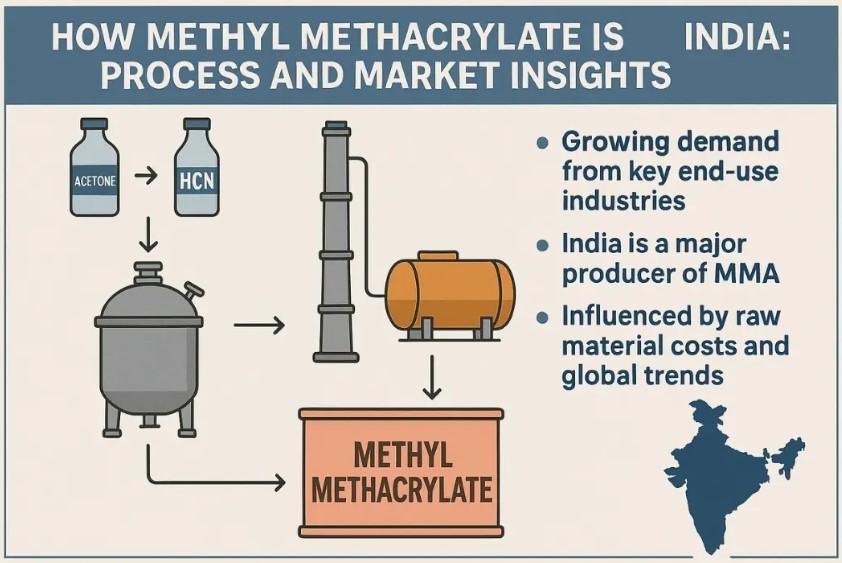
How Is Methyl Methacrylate Made? Complete MMA Production Process and Synthesis Guide
How Is Methyl Methacrylate Made? Complete MMA Production Process and Synthesis Guide Methyl Methacrylate (MMA) is an industrial monomer produced […]

MMA Chemical & Methyl Methacrylate
Methyl Methacrylate MMA Chemical Methyl Methacrylate, commonly known as MMA, is an important chemical building block used across the plastics, […]