You encounter it every day, likely without realizing it. The screen on your smartphone, the rear lights of the car ahead of you, and even the skylights letting sun into your office building they all share a common DNA. They are often made from a versatile plastic known as Poly Methyl Methacrylate, or PMMA.
Often referred to by trade names like Plexiglas® or Lucite®, PMMA is an engineering thermoplastic that has become a staple in modern manufacturing. Why? Because it offers a rare combination of crystal-clear transparency and impressive durability.
But what is Poly Methyl Methacrylate used for beyond just being a “glass substitute”? This guide dives deep into the diverse applications of PMMA, exploring how this synthetic polymer drives innovation in industries ranging from healthcare to architecture.
What is Poly Methyl Methacrylate (PMMA)?
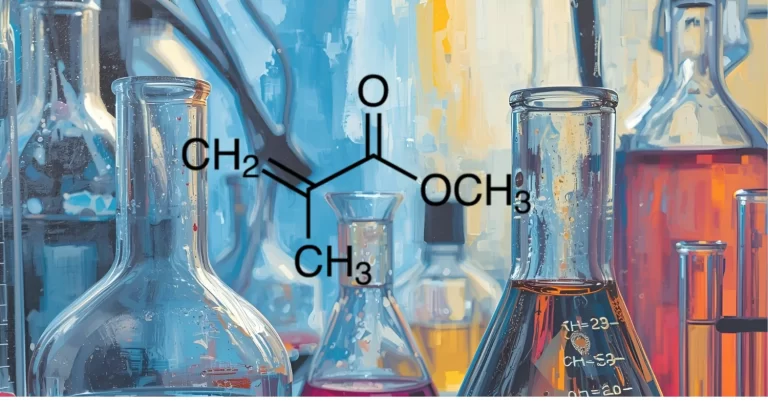
Poly Methyl Methacrylate (PMMA) is a transparent thermoplastic homopolymer. It is synthesized from the polymerization of methyl methacrylate (MMA) monomers.
In simpler terms, it is a synthetic resin produced from the polymerization of methyl methacrylate. While it is chemically a plastic, its behavior and appearance are remarkably similar to glass. This similarity is why it is classified as “acrylic glass.” However, unlike silica-based glass, PMMA is shatter-resistant and much lighter.
It can be processed in several ways:
- Casting: Pouring liquid syrup into molds (great for high-quality sheets).
- Extrusion: Pushing hot material through rollers (ideal for thinner, cost-effective sheets).
- Injection Molding: Injecting molten plastic into complex molds (perfect for intricate parts like car lenses).
Key Properties of PMMA
Before we look at where it is used, it helps to understand why engineers choose it. PMMA brings a specific set of strengths to the table that few other materials can match.
- Exceptional Optical Clarity: PMMA transmits up to 92% of visible light. This is actually higher than many grades of standard glass.
- Weather and UV Resistance: Unlike many plastics that yellow or become brittle under the sun, PMMA is naturally UV stable. It can withstand years of outdoor exposure without significant degradation.
- Lightweight: It has a density of roughly 1.19 g/cm³, making it less than half the weight of glass.
- Surface Hardness: It offers good scratch resistance compared to other clear plastics like polycarbonate, and it can be polished to restore its shine.
Because of its unique properties, PMMA is a workhorse material across several major sectors.
Automotive and Transportation
Car manufacturers love PMMA for its clarity and durability. It helps reduce vehicle weight, which improves fuel efficiency.
- Exterior Lighting: Tail lights, indicator covers, and headlight lenses rely on PMMA for its optical purity and resistance to road debris.
- Glazing: While windshields are usually laminated glass, side windows and sunroofs in lightweight vehicles or caravans are often PMMA.
- Interior Trim: High-gloss black panels (often called “piano black”) on dashboards and consoles are typically molded PMMA.
Construction and Architecture
Architects use PMMA when they need light transmission combined with safety.
- Skylights and Domes: Its weather resistance makes it ideal for roof windows that face constant sunlight.
- Sound Barriers: You often see thick PMMA sheets used as transparent noise barriers along highways.
- Aquariums: Massive public aquarium tanks use thick cast PMMA blocks because they are stronger than glass and offer less optical distortion at extreme thicknesses.
Medical and Healthcare
In environments where hygiene and biocompatibility are paramount, PMMA excels.
- Bone Cement: Perhaps surprisingly, PMMA is used in liquid form as “bone cement” to affix implants during orthopedic surgery.
- Intraocular Lenses: Because it is biologically inert, it was historically the primary material for replacement lenses in cataract surgery.
- Incubators: The clear walls of infant incubators are made from PMMA to allow easy observation while maintaining a warm, safe environment.
Lighting and Electronics
The way we light our world has changed, and PMMA is a big part of that.
- LED Diffusion: PMMA can be formulated to diffuse light. It is used in covers for LED strips and panels to spread light evenly and hide the individual “hotspots” of the diodes.
- LCD Screens: Layers of ultra-pure PMMA are used in the light guide plates of liquid crystal displays (LCDs) found in TVs and laptops.
Retail and Signage
Walk into any mall, and you are surrounded by PMMA.
- Point of Sale Displays: Cosmetic stands, jewelry cases, and brochure holders are fabricated from acrylic sheets because they look premium but are tough enough to handle retail traffic.
- Illuminated Signs: The colorful, glowing logos outside shops are almost exclusively made from acrylic due to its ability to transmit light and color brilliantly.
Choosing PMMA often comes down to balancing cost, performance, and aesthetics.
- Cost-Effectiveness: While more expensive than basic plastics like polystyrene, PMMA is generally cheaper than polycarbonate and significantly cheaper to transport and install than glass.
- Safety: If PMMA breaks, it fractures into large, dull-edged pieces rather than dangerous shards like glass. This makes it essential for public spaces like hockey rinks (where it is used as the protective spectator shielding).
- Versatility in Design: It can be thermoformed (heated and bent) into almost any curve or shape, allowing for design freedom that glass cannot offer.
Comparison with Other Materials
Is PMMA always the best choice? Not necessarily. It depends on the application.
PMMA vs. Glass
- The Winner: PMMA wins on weight (lighter) and impact resistance (safer).
- The Trade-off: Glass is harder and less prone to scratches. However, PMMA can be polished to remove scratches, whereas glass cannot.
PMMA vs. Polycarbonate (PC)
- The Winner: PMMA wins on optical clarity and cost. PC is naturally grayish and more expensive. PMMA also holds up better against UV light without yellowing.
- The Trade-off: Polycarbonate is virtually unbreakable (think bulletproof glass). If extreme impact resistance is the only goal, PC is the better choice.