
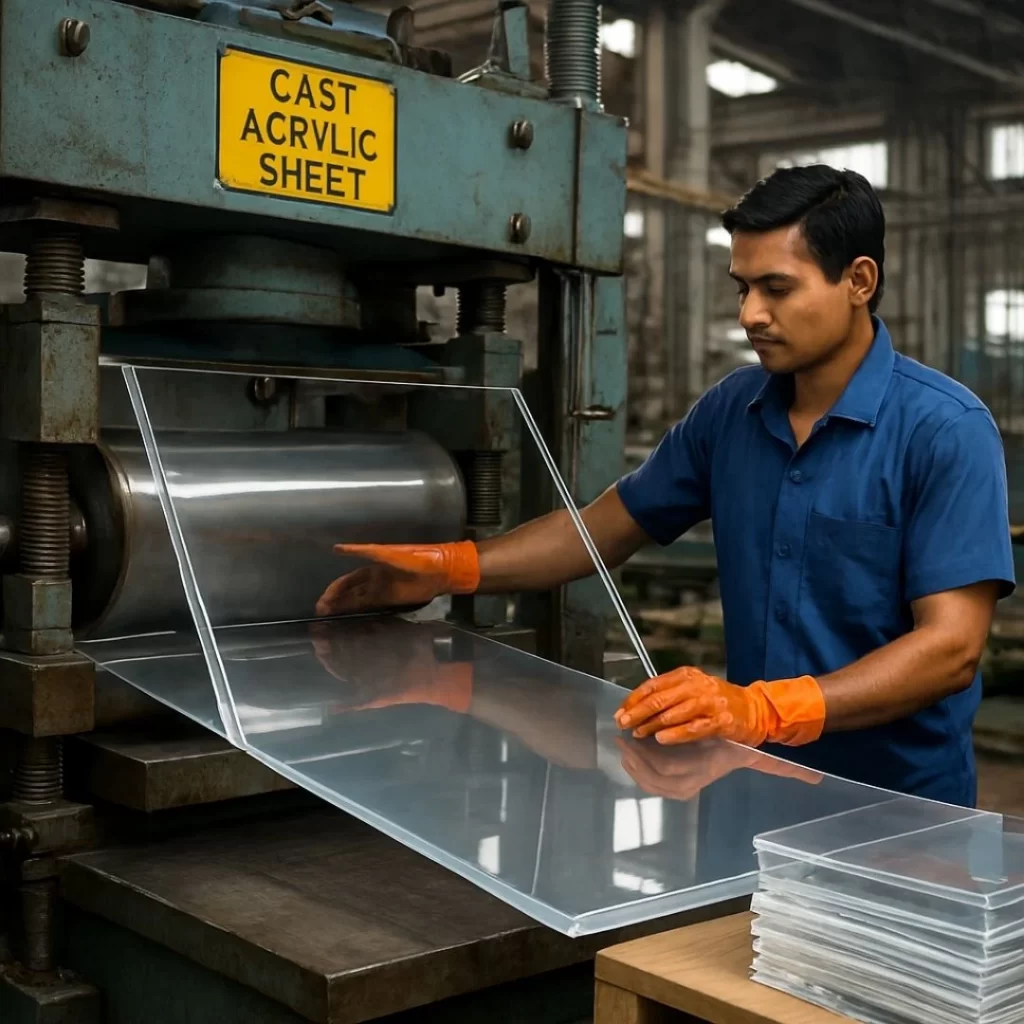
Acrylic sheet is one of the most widely used plastic materials across industries due to its clarity, strength, lightweight nature, and versatility. It is commonly used as a replacement for glass in many applications, offering better impact resistance and easier processing.
Understanding what acrylic sheet is and how it performs helps businesses, manufacturers, and buyers make better material decisions.
What Is an Acrylic Sheet?
An acrylic sheet is a transparent thermoplastic made from methyl methacrylate (MMA). When MMA undergoes polymerization, it forms poly methyl methacrylate (PMMA), which is the solid material used in acrylic sheets.
Acrylic is often referred to as:
- Acrylic plastic
- PMMA sheet
- Acrylic glass
It is known for its high optical clarity, allowing up to 92% light transmission, which makes it one of the clearest plastic materials available.
Key Properties of Acrylic Sheets
Acrylic sheets are preferred because of their strong performance across different conditions.
Optical Clarity
Acrylic sheets provide excellent transparency, making them ideal for displays, signage, and glazing applications.
Lightweight
They are significantly lighter than glass, which makes handling, installation, and transportation easier.
Impact Resistance
Acrylic is more resistant to impact than glass and does not shatter easily, improving safety.
Weather Resistance
It performs well in outdoor environments and resists UV damage without yellowing quickly.
Easy Fabrication
Acrylic sheets can be cut, drilled, bent, and polished with ease, making them suitable for custom applications.
Types of Acrylic Sheets
There are two main types of acrylic sheets used in industrial and commercial applications.
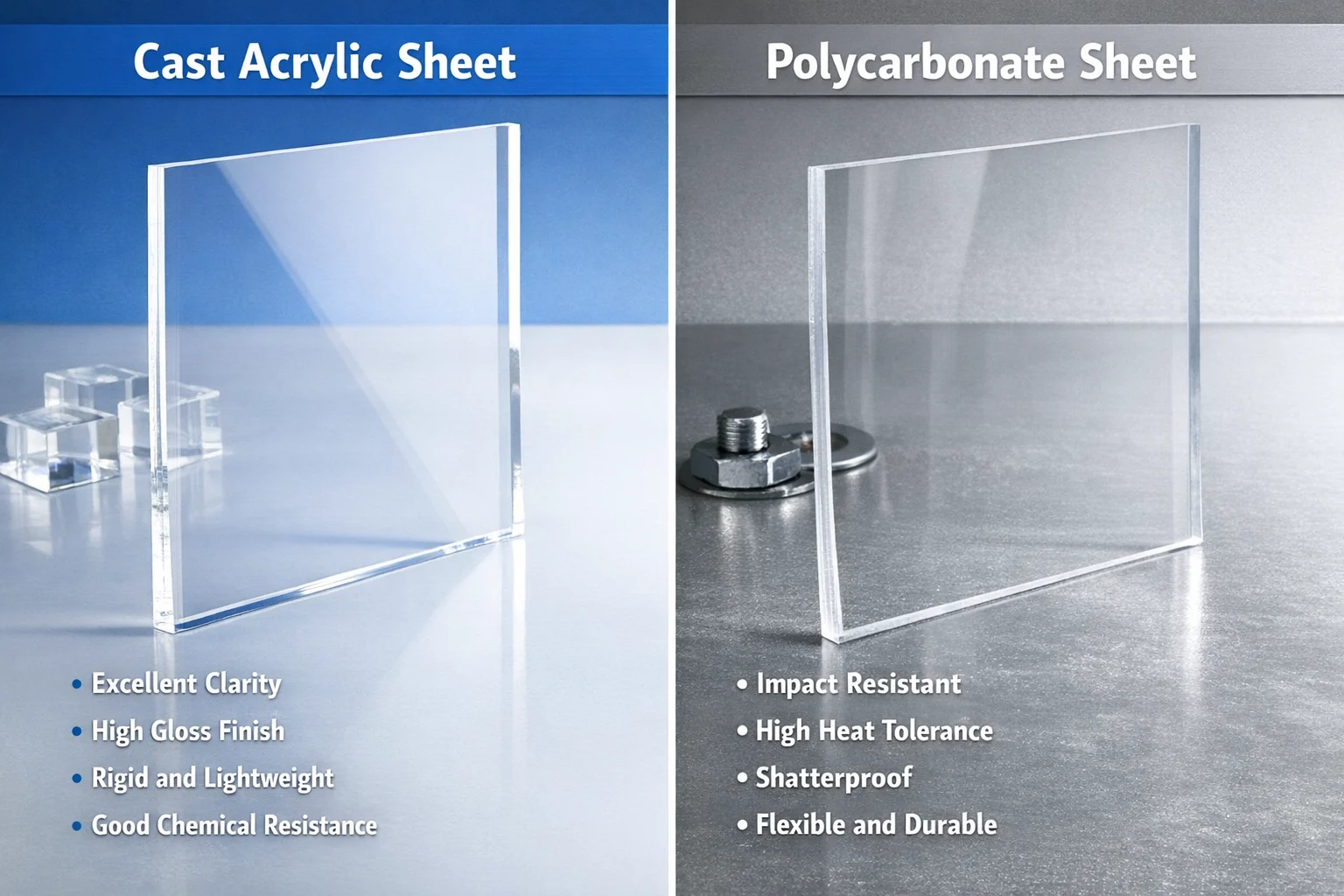
Cast Acrylic Sheet
Produced by pouring liquid MMA into molds and allowing it to harden.
Benefits:
- Better clarity
- Higher chemical resistance
- Suitable for machining and polishing
- Available in thicker sheets
Extruded Acrylic Sheet
Manufactured by pushing melted acrylic through a die.
Benefits:
- Lower cost
- Uniform thickness
- Easier to thermoform
- Suitable for high-volume production
Common Uses of Acrylic Sheets
Acrylic sheets are used across multiple industries due to their versatility.
Industrial Applications
Used for machine guards, panels, and protective covers.
Construction and Architecture
Used in windows, partitions, skylights, and decorative panels.
Signage and Advertising
Commonly used in display boards, LED signage, and branding materials.
Automotive Industry
Used in lighting components, dashboards, and protective covers.
Furniture and Interior Design
Used in modern furniture, shelves, and decorative elements.
Acrylic Sheet vs Glass
Many buyers compare acrylic sheets with glass before selecting a material.
- Acrylic is lighter and easier to handle
- Acrylic is more impact-resistant
- Glass is more scratch-resistant
- Acrylic is easier to fabricate
In most industrial applications, acrylic provides better flexibility and cost efficiency.
Advantages of Acrylic Sheets
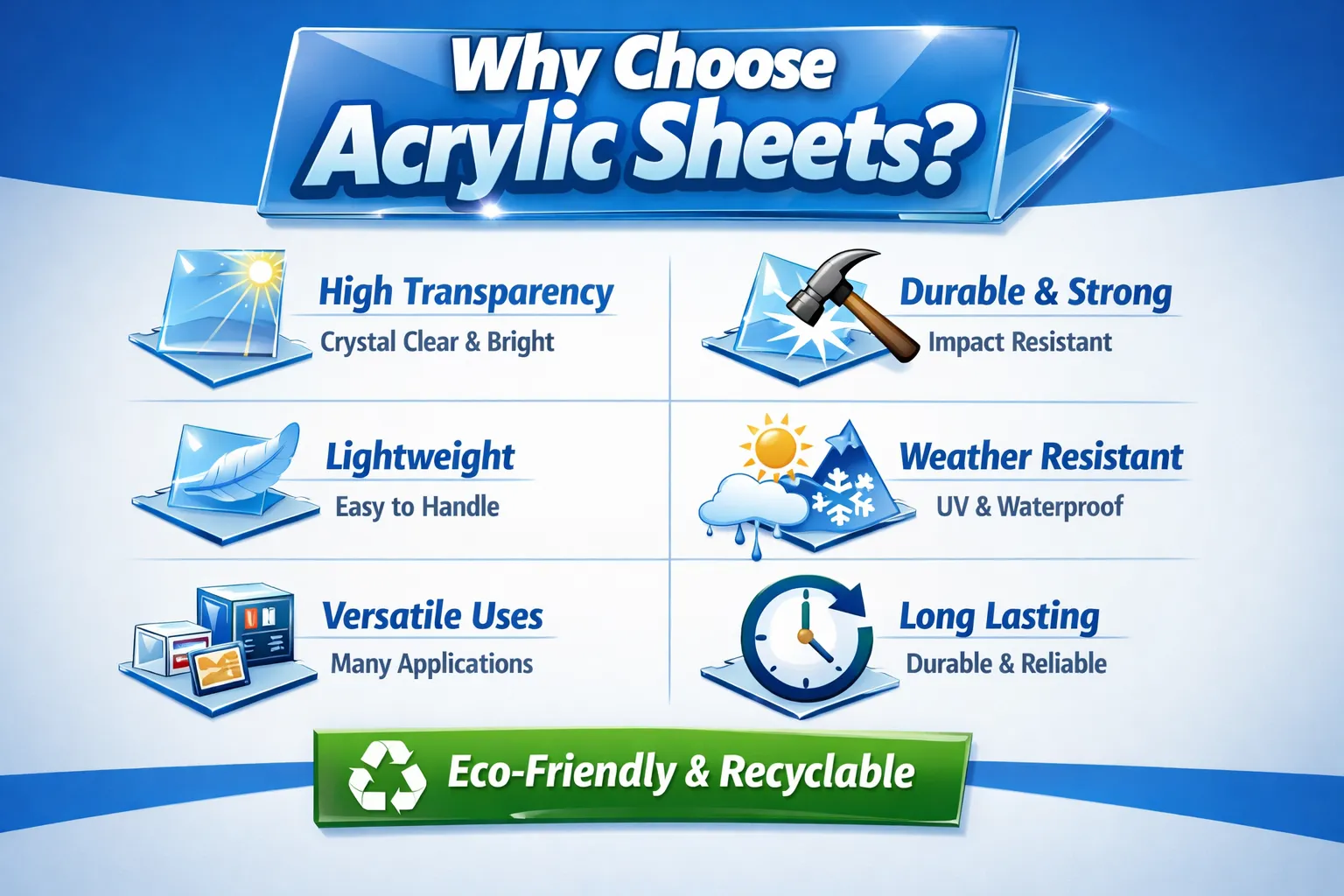
- High transparency and clarity
- Strong and durable
- Lightweight and easy to install
- Resistant to weather and UV exposure
- Easy to machine and customize
- Suitable for multiple applications
Limitations of Acrylic Sheets
- Lower scratch resistance compared to glass
- Can be affected by certain chemicals
- Slightly higher cost than basic plastics
Understanding these limitations helps in choosing the right application.
How to Choose the Right Acrylic Sheet
When selecting an acrylic sheet, consider:
- Type: Cast or extruded
- Thickness: Based on strength and design needs
- Application: Indoor or outdoor use
- Surface finish: Clear, matte, or colored
- Supplier quality: Consistency and documentation
Choosing the right combination ensures better performance and long-term results.
Conclusion
Acrylic sheets are a reliable and versatile material used across industries for their clarity, strength, and ease of fabrication. Whether you are working in manufacturing, construction, or design, understanding acrylic sheet properties and types helps you select the right material for your project.
By choosing the right acrylic sheet and supplier, you can improve product quality, reduce processing issues, and achieve better long-term performance.

India to Global MMA Export Logistics
India to Global MMA Export Logistics Complete Guide for International Buyers Exporting methyl methacrylate (MMA) from India to international markets […]

R-MMA vs Virgin MMA
R-MMA vs Virgin MMA Complete Guide to Reclaimed and Virgin Methyl Methacrylate When choosing methyl methacrylate (MMA) for industrial production, […]

Acrylic Sheet Best Uses: Applications, Benefits, and Industries
Acrylic Sheet Best Uses Applications, Benefits, and Industries Acrylic sheets are widely used as a lightweight, durable, and visually clear […]