Adhesives play a critical role in modern manufacturing, construction, and industrial assembly. Among the most widely used high-performance bonding solutions are modified acrylate adhesives and methyl methacrylate (MMA) adhesives. These systems are valued for their strong bonding capability, fast curing time, and ability to join difficult substrates without complex surface preparation.
This article explains what modified acrylate and MMA adhesives are, how they work, where they are used, and why they are preferred in demanding industrial applications.
Modified acrylate adhesives are advanced structural adhesives formulated by modifying acrylic-based chemistry to improve performance characteristics such as flexibility, impact resistance, and bonding strength. These adhesives are designed to deliver high-strength bonds while remaining tolerant of surface contamination and environmental stress.
Unlike traditional adhesives, modified acrylates bond well to a wide variety of materials, including metals, plastics, composites, and coated surfaces. Their formulation allows them to cure rapidly at room temperature and maintain performance under vibration, heat, and mechanical load.
Key Characteristics of Modified Acrylate Adhesives
High bond strength on dissimilar materials
Fast cure time without external heat
Excellent resistance to impact and vibration
Good performance on minimally prepared surfaces
Long-term durability in harsh environments
Because of these properties, modified acrylate adhesives are often used as replacements for mechanical fasteners or welding in industrial assemblies.
What Are Methyl Methacrylate (MMA) Adhesives?
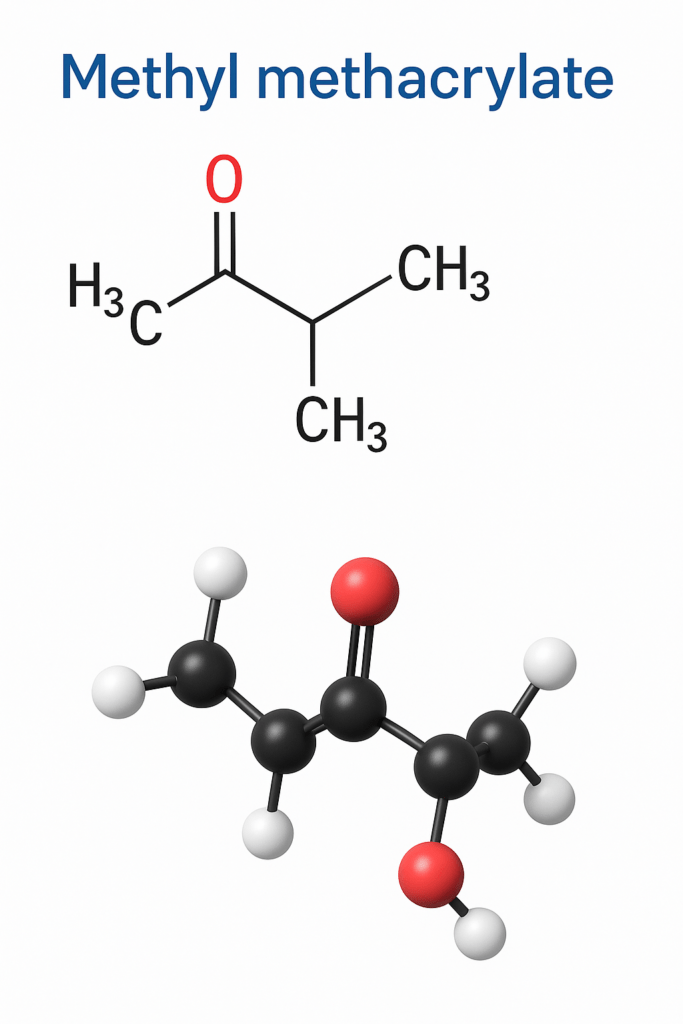
Methyl methacrylate adhesives are a specific category of acrylic structural adhesives that use MMA monomer as a core reactive component. These adhesives cure through a chemical reaction that forms a strong polymer network between bonded surfaces.
MMA adhesives are known for their exceptional strength, toughness, and ability to bond challenging substrates such as thermoplastics, metals, and fiber-reinforced composites. They are widely used in applications where reliability and structural integrity are critical.
How MMA Adhesives Work
MMA adhesives typically consist of two components:
A resin containing methyl methacrylate and acrylic polymers
An activator or initiator that triggers polymerization
When mixed, the adhesive undergoes rapid polymerization, forming a rigid yet tough bond that distributes stress evenly across the joint.
Difference Between Modified Acrylate and MMA Adhesives
While both belong to the acrylic adhesive family, there are important differences between modified acrylate adhesives and MMA adhesives.
Modified acrylate adhesives are often formulated to improve flexibility, reduce odor, and enhance environmental resistance. MMA adhesives, on the other hand, focus more on maximum structural strength and fast curing for heavy-duty bonding.
In practice, MMA adhesives are commonly used for load-bearing and structural applications, while modified acrylates may be selected where balance between strength and flexibility is required.
Applications of Modified Acrylate and MMA Adhesives
These adhesives are used across a wide range of industries due to their versatility and performance.
Industrial and Manufacturing Applications
Bonding metal panels and frames
Assembly of machinery and equipment
Structural bonding in manufacturing lines
Construction and Infrastructure
Panel bonding and façade systems
Structural repairs and reinforcements
Bonding of composite materials
Automotive and Transportation
Body panel assembly
Bonding of plastics, metals, and composites
Vibration-resistant structural joints
Marine and Wind Energy
Electronics and Appliances
Advantages of MMA Adhesives Over Traditional Bonding Methods
Methyl methacrylate adhesives offer several advantages over welding, riveting, or standard epoxies.
No need for drilling or mechanical fasteners
Reduced stress concentration across joints
Faster assembly and lower labor costs
Strong bonds on difficult substrates
Improved aesthetics with clean, invisible joints
These benefits make MMA adhesives especially valuable in modern lightweight and composite-based designs.
Surface Preparation and Bonding Performance
One of the major advantages of modified acrylate and MMA adhesives is their tolerance for surface contamination. While basic cleaning is recommended, these adhesives can bond effectively even on surfaces with minor oil residue or oxidation.
This reduces preparation time and makes them suitable for high-throughput industrial environments.
Environmental and Performance Resistance
Both modified acrylate and MMA adhesives show strong resistance to:
Moisture and humidity
Temperature fluctuations
Chemical exposure
UV and weathering
This makes them suitable for indoor and outdoor applications where long-term durability is essential.
Role of Methyl Methacrylate in Adhesive Formulations
Methyl methacrylate acts as a reactive monomer that contributes to fast curing, high bond strength, and toughness. Its polymerization behavior allows adhesive systems to achieve a balance between rigidity and impact resistance, which is critical in structural bonding applications.
Choosing the Right Adhesive System
Selecting between modified acrylate and MMA adhesives depends on factors such as:
Consulting with adhesive suppliers and technical experts ensures the right formulation is chosen for each application.
Conclusion
Modified acrylate and methyl methacrylate adhesives are high-performance bonding solutions designed for modern industrial challenges. Their ability to bond dissimilar materials, cure quickly, and withstand mechanical and environmental stress makes them essential in construction, automotive, marine, and manufacturing industries.
As demand grows for lighter, stronger, and more efficient assemblies, MMA and modified acrylate adhesives continue to play a vital role in advanced bonding technology.