Introduction to MMA Monomer
Methyl Methacrylate (MMA) monomer is a highly reactive chemical building block used to produce high-clarity acrylic sheets, durable resins, protective coatings, and biocompatible medical polymers. This complete technical guide breaks down the essential facts about MMA monomer, including its chemical specifications, polymerization characteristics, industrial production methods, and primary commercial applications.
1. Chemical Properties and Characteristics of MMA Monomer
Methyl Methacrylate (C₅H₈O₂) is a colorless, volatile liquid with a sharp, fruity odor. It has a molecular weight of 100.12 g/mol and is miscible with most organic solvents. MMA monomer has a boiling point of approximately 101°C and a melting point of -48°C. It is highly flammable with a low flash point, requiring careful storage and transportation.
One of the most notable properties of MMA is its ability to polymerize rapidly under the right conditions. The resulting polymer, Polymethyl Methacrylate (PMMA), is a transparent, rigid plastic with excellent weather resistance and high light transmittance making it a preferred substitute for glass in many applications.
2. Polymerization Behavior and Comonomer Flexibility
MMA monomer is well-known for undergoing free-radical polymerization, forming homopolymers like PMMA or a wide range of copolymers. These copolymers are often blended with monomers such as butyl acrylate, 2-ethylhexyl acrylate, styrene, methacrylic acid, and acrylic acid. The resulting resins can be tailored for specific flexibility, hardness, or adhesion properties depending on the application.
This adaptability makes MMA monomer a versatile component in producing paints, coatings, adhesives, and impact-resistant plastics. Its excellent compatibility with other acrylate and methacrylate monomers provides manufacturers with broad formulation freedom.
3. Methods of MMA Monomer Production
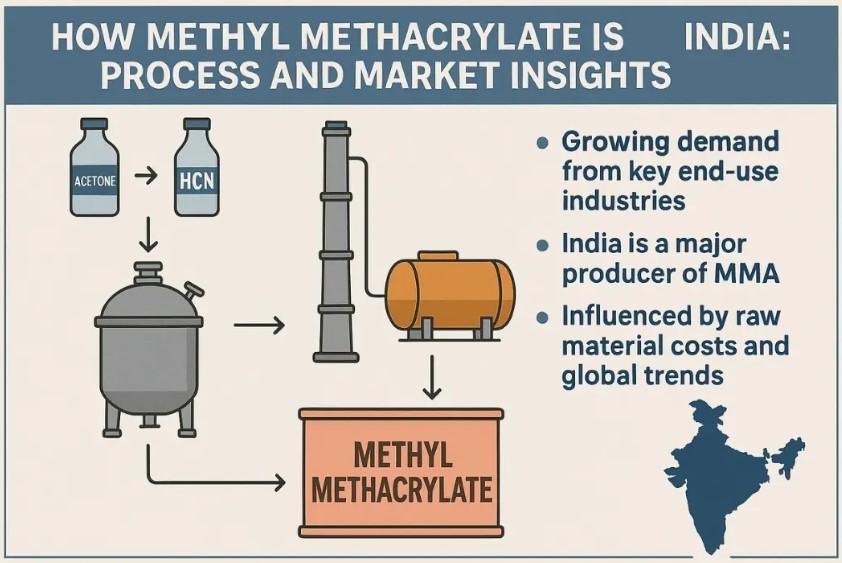
The most widely used industrial process for manufacturing MMA monomer is the acetone cyanohydrin (ACH) process. In this method, acetone reacts with hydrogen cyanide to produce acetone cyanohydrin, which is subsequently transformed into MMA through several steps involving sulfuric acid and methanol.
Alternative, more eco-friendly production routes are being explored, such as the ethylene-based Alpha process and direct oxidation methods. However, the ACH process remains dominant due to its cost-effectiveness and maturity in the global supply chain, despite generating ammonium bisulfate as a byproduct.
4. Applications and End-Use Industries
MMA monomer is the foundation of numerous end-use products and applications, particularly in industries where durability, weatherability, and clarity are essential. Key applications include:
The unique combination of optical clarity, impact resistance, and stability makes MMA indispensable in modern manufacturing.
5. Historical Development and Industry Evolution
The chemistry of methacrylate dates back to the early 19th century, but MMA’s industrial journey began in the 1930s with the commercialization of PMMA under trade names like Plexiglas and Lucite. The discovery of its potential as a shatter-resistant alternative to glass revolutionized several markets, from aircraft canopies during World War II to today’s automotive, construction, and electronics sectors.
Over the decades, ongoing innovations in polymer technology and sustainable manufacturing processes have further enhanced the performance, safety, and environmental impact of MMA monomer-based products.