MMA Chemicals

How Is Methyl Methacrylate Production Made Process

How Is Methyl Methacrylate Production Made Process

Methyl Methacrylate Production Made Process, mma chemicals, methyl methacrylate, methyl methacrylate what is it used for

Methyl Methacrylate (MMA) is one of the most valuable building blocks in the global chemical industry. It is the primary raw material used to manufacture Polymethyl Methacrylate (PMMA), a transparent engineering plastic commonly known as acrylic. PMMA is found in products ranging from automotive lighting and construction panels to medical devices, retail displays, and consumer electronics. Before these products reach the market, they begin with a carefully controlled manufacturing journey that ensures the quality and consistency of the MMA monomer.

Many manufacturers, distributors, and industrial buyers want to understand how is methyl methacrylate production made & process before selecting a supplier or planning production. The manufacturing process is more than simply combining chemicals. It involves advanced chemical engineering, precise reaction control, purification techniques, and strict quality assurance to produce a high-purity monomer suitable for demanding industrial applications.

Modern MMA chemicals are manufactured using several production technologies, each designed to maximize efficiency, product quality, and environmental performance. Whether produced through the Acetone Cyanohydrin (ACH) route, the C4 process, or newer ethylene-based technologies, the objective remains the same: producing premium-quality methyl methacrylate that delivers reliable performance during polymerization and final product manufacturing.

This guide explains the complete production journey, beginning with the chemistry behind MMA, the raw materials involved, and the major stages of the manufacturing process. It also highlights why high-quality MMA remains essential for industries worldwide.

What Is Methyl Methacrylate?

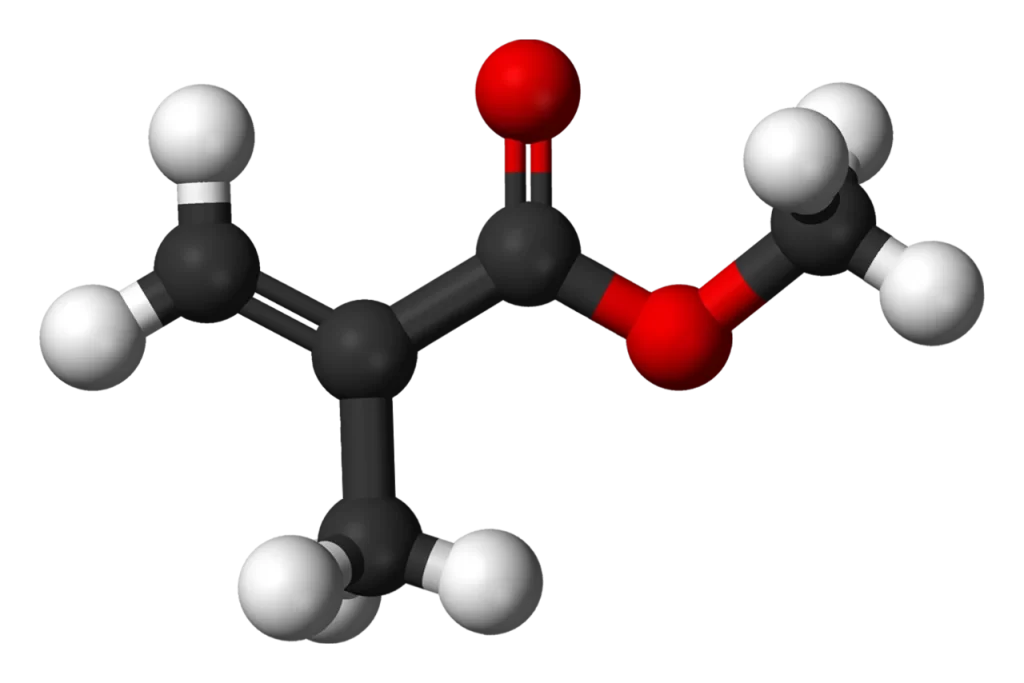
Methyl Methacrylate, commonly known as MMA, is a clear, colorless liquid organic compound with the molecular formula C₅H₈O₂. It belongs to the ester family and is widely recognized as the primary monomer used to manufacture PMMA and other acrylic polymers.

One of the defining characteristics of MMA is its ability to polymerize into strong, lightweight, and transparent materials. This property has made it one of the most important industrial monomers used across numerous manufacturing sectors.

Today, methyl methacrylate is used to produce:

  • Acrylic sheets
  • Optical lenses
  • Automotive lighting components
  • Protective glazing
  • Industrial coatings
  • Structural adhesives
  • Medical devices
  • Dental materials
  • Consumer electronics
  • Display panels

Its combination of optical clarity, durability, weather resistance, and excellent processing characteristics continues to drive global demand.


What Are MMA Chemicals?

The term MMA chemicals generally refers to Methyl Methacrylate and the associated chemical products used throughout acrylic polymer manufacturing.

These chemicals form the foundation for numerous industrial materials that require high transparency, mechanical strength, and long-term durability.

Industries rely on MMA chemicals because they help manufacture products that offer:

  • High optical clarity
  • Lightweight construction
  • Excellent UV resistance
  • Strong weather resistance
  • Superior surface finish
  • Easy fabrication
  • Long service life

From large infrastructure projects to precision medical equipment, MMA chemicals play a central role in producing modern engineering materials.


Why Is Methyl Methacrylate Important?

The importance of MMA extends far beyond its role as a raw material.

Manufacturers value methyl methacrylate because it enables the production of advanced acrylic materials that combine performance with design flexibility.

Compared with many conventional plastics, PMMA manufactured from MMA offers several advantages:

  • Exceptional transparency
  • Better outdoor durability
  • Lightweight performance
  • High impact resistance
  • Excellent dimensional stability
  • Resistance to UV degradation
  • Smooth, glossy appearance

These characteristics make MMA indispensable in industries where product quality, appearance, and long-term reliability are essential.

As demand grows for lightweight and sustainable materials, the use of MMA continues to expand across global markets.


Chemical Structure of Methyl Methacrylate

Understanding the molecular structure of MMA helps explain why it performs so effectively during manufacturing.

Molecular Formula

C₅H₈O₂

IUPAC Name

Methyl 2-methylprop-2-enoate

Its molecular structure consists of three important components.

Vinyl Double Bond

The carbon-carbon double bond allows MMA molecules to join together during polymerization, forming long polymer chains that create PMMA.

Ester Functional Group

The ester group contributes to the chemical stability of MMA while supporting compatibility with various manufacturing processes.

Methyl Group

The methyl group improves the strength and durability of the final acrylic polymer, helping manufacturers produce materials that withstand demanding industrial environments.

This balanced molecular design makes MMA one of the most efficient acrylic monomers available today.


Raw Materials Used in Methyl Methacrylate Production

Before understanding how is methyl methacrylate production made & process, it is helpful to know the raw materials involved.

Different production technologies use different feedstocks, but the objective is always to create high-purity MMA suitable for industrial applications.

Some commonly used raw materials include:

  • Acetone
  • Hydrogen cyanide
  • Isobutylene
  • Ethylene
  • Methanol
  • Carbon monoxide
  • Oxygen
  • Various catalysts

The selection of raw materials depends on the production technology adopted by the manufacturer.

Modern facilities continuously optimize raw material usage to improve production efficiency, reduce waste, and support more sustainable manufacturing practices.


How Is Methyl Methacrylate Production Made?

Many industrial buyers ask how is methyl methacrylate production made & process because the manufacturing method directly influences product quality.

Although several production technologies are available, every process follows a similar sequence:

  1. Selection of high-quality raw materials.
  2. Controlled chemical reactions to form intermediate compounds.
  3. Conversion into crude Methyl Methacrylate.
  4. Purification through advanced separation techniques.
  5. Quality testing and analysis.
  6. Storage and packaging for industrial distribution.

Each stage requires strict process control to maintain consistent purity and performance.

Even small variations in reaction conditions can affect polymerization behavior and the quality of finished acrylic products.

For this reason, leading manufacturers invest heavily in process automation, laboratory testing, and quality assurance systems.


Overview of the Methyl Methacrylate Production Process

Although the exact manufacturing route varies, the overall production process follows a carefully engineered workflow.

Step 1: Raw Material Preparation

Production begins by selecting and preparing raw materials according to the chosen manufacturing technology.

High-purity feedstocks reduce impurities and improve reaction efficiency.

Step 2: Chemical Reaction

The prepared raw materials undergo controlled chemical reactions under specific temperature and pressure conditions.

These reactions create intermediate compounds that eventually lead to MMA formation.

Step 3: Purification

The crude product contains impurities that must be removed before industrial use.

Advanced distillation and purification systems help achieve the high purity required for PMMA manufacturing and other specialty applications.

Step 4: Quality Control

Every production batch undergoes detailed laboratory testing.

Manufacturers evaluate factors such as:

  • Purity
  • Chemical composition
  • Moisture content
  • Stability
  • Polymerization performance

Only batches meeting strict quality specifications proceed to packaging.

Step 5: Storage and Distribution

Finished MMA is stored under controlled conditions before being supplied to manufacturers worldwide.

Proper storage preserves product quality and ensures consistent performance during downstream processing.

By maintaining strict quality control throughout every stage, manufacturers produce MMA chemical that meet the demanding requirements of industries such as automotive, construction, healthcare, electronics, and acrylic sheet manufacturing.

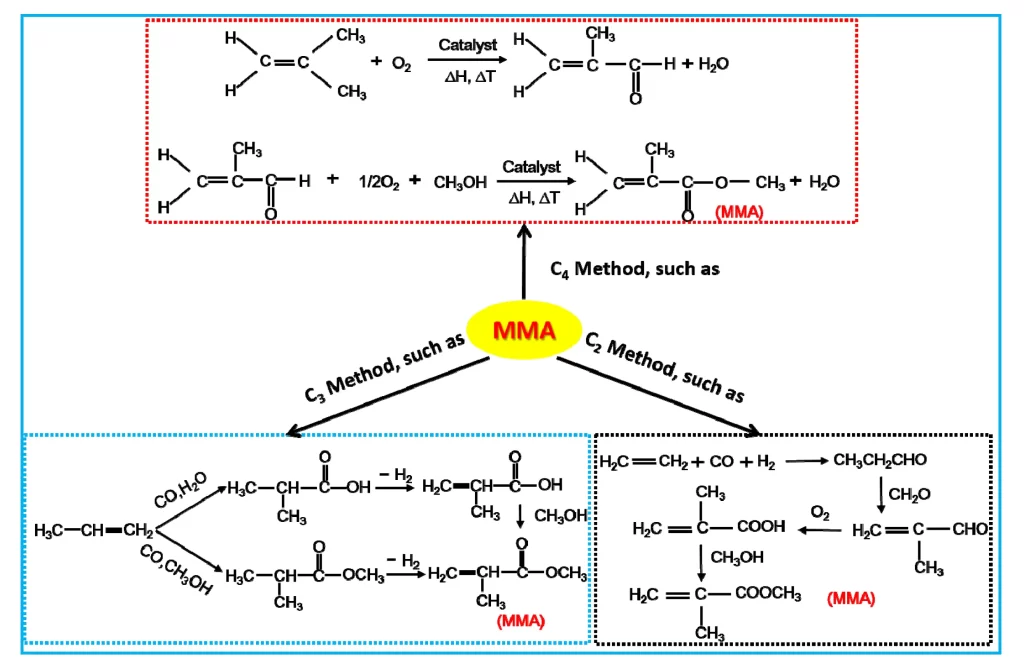
Diagram explaining methyl methacrylate manufacturing process in India with raw materials, production stages, and market demand overview.

Major Methyl Methacrylate Production Processes

Manufacturers use several technologies to produce Methyl Methacrylate, each designed to deliver high-purity MMA while improving production efficiency, product consistency, and environmental performance. Although the manufacturing routes differ, they all aim to produce premium-quality MMA chemicals suitable for PMMA manufacturing and other industrial applications.

The three most widely recognized production methods are:

  • Acetone Cyanohydrin (ACH) Process
  • C4 Process
  • Ethylene-Based Process

Each technology has unique advantages depending on raw material availability, production capacity, and sustainability goals.


Acetone Cyanohydrin (ACH) Process

The Acetone Cyanohydrin (ACH) process is the oldest and one of the most widely used methods for producing Methyl Methacrylate.

In this process, acetone reacts with hydrogen cyanide to form acetone cyanohydrin. Through a series of carefully controlled chemical reactions, this intermediate is converted into crude MMA. The product then undergoes purification to achieve the high purity required for industrial use.

Advantages of the ACH Process

  • Well-established industrial technology
  • High production efficiency
  • Consistent product quality
  • Suitable for large-scale manufacturing
  • Reliable process control

Although the ACH route has been used successfully for decades, manufacturers continue to improve the process by reducing waste generation, optimizing energy consumption, and improving overall production efficiency.


C4 Production Process

The C4 production route has become increasingly popular because it uses C4 hydrocarbons such as isobutylene as the primary feedstock.

Instead of relying on hydrogen cyanide, this process follows a different chemical pathway to produce high-quality Methyl Methacrylate.

Many modern manufacturers choose the C4 process because it offers:

  • Improved raw material utilization
  • Better environmental performance
  • Lower waste generation
  • Higher production efficiency
  • Consistent product quality

The C4 route is widely adopted by facilities focused on improving sustainability while maintaining excellent manufacturing performance.


Ethylene-Based Production Process

The ethylene-based process represents one of the newest developments in MMA chemicals manufacturing.

Using ethylene as a primary feedstock, this production method reduces dependence on traditional raw materials while improving overall process efficiency.

Compared with older production routes, the ethylene process offers several advantages:

  • Lower environmental impact
  • Better atom efficiency
  • Reduced by-product formation
  • Improved resource utilization
  • Greater production flexibility

As manufacturers continue investing in sustainable technologies, ethylene-based production is expected to play a larger role in the future of methyl methacrylate manufacturing.


Polymerization into PMMA

Producing high-purity MMA is only the beginning of the manufacturing journey.

Once purified, Methyl Methacrylate undergoes polymerization to form Polymethyl Methacrylate (PMMA), one of the world’s most widely used transparent engineering plastics.

During polymerization, thousands of MMA molecules join together to form long polymer chains.

This transformation creates materials with outstanding performance characteristics, including:

  • Excellent optical clarity
  • High weather resistance
  • Lightweight construction
  • Strong impact resistance
  • Long service life
  • Smooth surface finish

These properties explain why PMMA is widely used as an alternative to glass in many industrial applications.


Quality Control During MMA Manufacturing

Every stage of the methyl methacrylate process requires strict quality control.

Industrial manufacturers perform continuous testing to ensure every production batch meets required specifications before shipment.

Typical quality parameters include:

  • Chemical purity
  • Moisture content
  • Polymerization stability
  • Color consistency
  • Impurity levels
  • Storage stability

Maintaining consistent quality is essential because impurities can influence polymerization behavior and reduce the performance of finished acrylic products.

Advanced analytical laboratories and automated process control systems help manufacturers maintain consistent product quality while minimizing production variation.


Why High-Quality MMA Chemicals Matter

The quality of MMA chemicals has a direct impact on manufacturing efficiency and final product performance.

Premium-grade MMA provides:

  • Better optical clarity
  • Improved polymerization efficiency
  • Consistent molecular structure
  • Higher weather resistance
  • Reduced manufacturing defects
  • Greater long-term durability

Manufacturers that use high-purity MMA often experience lower production waste, improved process stability, and higher-quality finished products.

Selecting reliable raw materials is therefore an important part of maintaining competitive manufacturing operations.


Why Choose MMA Chemicals?

Whether you manufacture acrylic sheets, coatings, adhesives, or specialty polymers, partnering with a trusted supplier is essential.

MMA Chemicals supplies industrial-grade Methyl Methacrylate that meets the quality requirements of modern manufacturing industries.

Our solutions support applications including:

  • PMMA manufacturing
  • Acrylic sheet production
  • Industrial coatings
  • Adhesives
  • Specialty polymer manufacturing

Explore our Methyl Methacrylate supply services to learn more about bulk supply solutions and technical support for your manufacturing needs.


Conclusion

Understanding how is methyl methacrylate production made & process helps manufacturers appreciate the advanced engineering behind one of the world’s most important industrial monomers.

From raw material preparation and chemical reactions to purification, quality testing, and polymerization, every stage of the production process is carefully controlled to produce high-purity Methyl Methacrylate. Whether manufactured through the ACH, C4, or ethylene-based route, the objective remains the same: delivering reliable MMA chemicals that meet the demanding requirements of modern industries.

Today, methyl methacrylate plays a critical role in producing PMMA, acrylic sheets, automotive components, coatings, adhesives, medical devices, and electronic products. As industries continue to demand lightweight, durable, and high-performance materials, the importance of premium-quality MMA will continue to grow.

Choosing an experienced supplier ensures consistent product quality, dependable bulk supply, and technical expertise that supports long-term manufacturing success.

Methyl Methacrylate Used For? Industrial Applications Across Major Industries

Frequently Asked Questions

Methyl Methacrylate is produced through controlled chemical reactions using production methods such as the Acetone Cyanohydrin (ACH) process, C4 process, and ethylene-based process. The product is then purified and tested before industrial use.


The ACH process remains one of the most widely used manufacturing methods because of its proven efficiency and consistent product quality.

Methyl Methacrylate is primarily used to manufacture PMMA, acrylic sheets, automotive components, coatings, adhesives, medical devices, construction materials, and electronic products.

High-purity MMA improves polymerization efficiency, enhances optical clarity, reduces production defects, and ensures consistent performance in finished acrylic products.

Major industries include automotive, construction, healthcare, electronics, signage, coatings, adhesives, aerospace, and industrial manufacturing.

Businesses can obtain high-quality Methyl Methacrylate from experienced suppliers like MMA Chemicals that provide reliable bulk supply, technical expertise, and consistent product quality.

How Is Methyl Methacrylate Production Made Process

How Is Methyl Methacrylate Production Made Process

How Is Methyl Methacrylate Production Made Process Click here Methyl Methacrylate (MMA) is one of the most valuable building blocks […]

MMA Chemical Properties: Structure, Characteristics & Benefits

MMA Chemical Properties: Structure, Characteristics & Benefits

MMA Chemical Properties: Structure, Characteristics & Benefits Methyl Methacrylate (MMA) is one of the most important chemical monomers used in […]

What Is Methyl Methacrylate Used For? Industrial Applications

What Is Methyl Methacrylate Used For? Industrial Applications

DEMO – Title DEMO DEMO DEMO DEMO DEMO DEMO DEMO DEMO DEMO DEMO DEMO DEMO DEMO DEMO DEMO DEMO DEMO […]

Leave a Comment

Your email address will not be published. Required fields are marked *

5 + thirteen =

Scroll to Top