Ever wonder what stands between a diver and the ocean in a deep-sea submersible? Or what keeps a retail display crystal clear after years under harsh store lighting? The answer is often the same: cast acrylic. This material is a staple in modern engineering, celebrated for being lighter than glass yet far more impact-resistant.
For procurement managers and industrial engineers, understanding how to make cast acrylic sheets is critical. It is not just about knowing the recipe; it is about understanding why this specific manufacturing method produces a material with superior optical clarity and mechanical strength compared to other plastics.
In this guide, we strip back the complexity of the chemical process. We will take you through the journey from liquid monomer to solid sheet, explaining the precise steps that ensure quality, durability, and performance for your industrial applications.
What Are Cast Acrylic Sheets?
Cast acrylic is a high-grade thermoplastic material, chemically known as poly methyl methacrylate (PMMA). Unlike extruded acrylic, which is pushed through rollers while hot, cast acrylic is created by a static chemical reaction inside a mold.
This fundamental difference in production gives cast acrylic its signature properties:
- Unrivaled Clarity: It allows 92% of visible light to pass through, exceeding that of standard glass.
- Chemical Resistance: Its molecular structure resists attacks from many solvents and cleaners.
- Thermal Stability: It handles temperature fluctuations better than many other plastics.
These sheets are the material of choice for demanding industries, from automotive windshields to heavy-duty construction glazing and high-end retail point-of-sale displays.
Materials Used in Cast Acrylic Sheet Production
The quality of the final sheet depends entirely on the purity of the ingredients. The process begins with a specific liquid component.
The Primary Ingredient: Methyl Methacrylate (MMA)
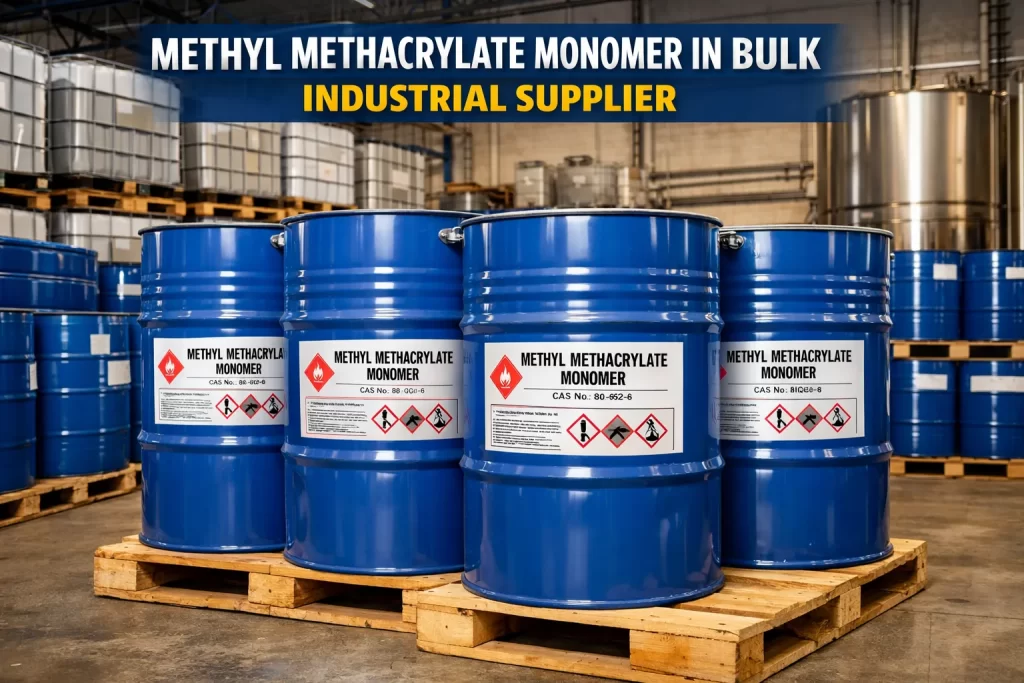
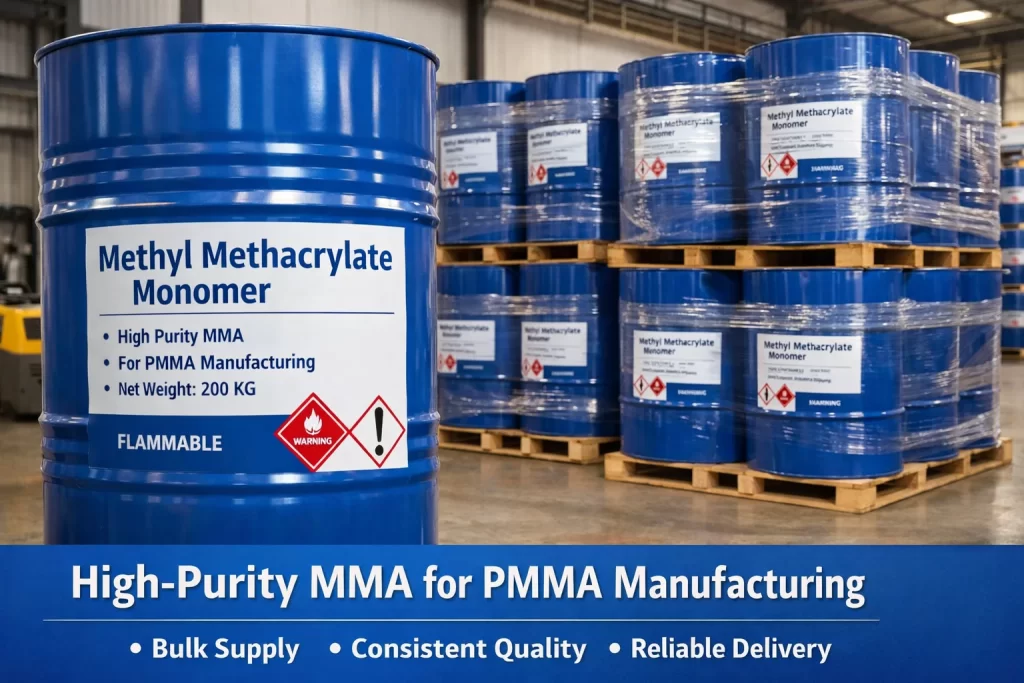
The foundation of every cast acrylic sheet is Methyl Methacrylate (MMA) monomer. This clear, colorless liquid is the starting point. Through the manufacturing process, these individual molecules are chemically bonded together to form long, strong chains, turning the liquid into a solid polymer.
Essential Additives
To tailor the sheet for specific environments, manufacturers introduce additives into the liquid MMA:
- Initiators: These are chemical catalysts required to start the hardening process.
- UV Stabilizers: Crucial for outdoor applications, these prevent the sun’s rays from degrading or yellowing the plastic.
- Plasticizers: Added in small amounts to improve flexibility and impact resistance.
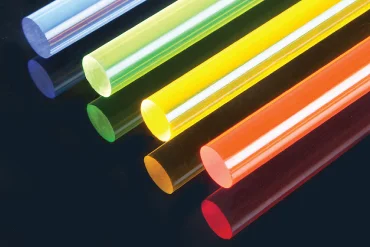
- Pigments: Dyes can be mixed in to create an infinite range of colors, from opaque blacks to translucent neons.
Step-by-Step Process to Make Cast Acrylic Sheets
The transformation from liquid to solid is a delicate operation requiring strict temperature control and cleanroom environments. Here is how it happens.
Step 1: Preparing the MMA Monomer
The process starts in a mixing vessel. The raw MMA monomer is mixed with the initiator and any required additives. This mixture is often agitated to create a homogenous “syrup” or prepolymer. Removing air bubbles at this stage is vital; any trapped air will result in a defective sheet.
Step 2: Pouring the Liquid Monomer into Molds
This step defines the casting method.
- The Setup: A mold is created using two sheets of highly polished glass (or sometimes steel). A flexible gasket is placed between them to define the thickness of the final sheet.
- The Pour: The viscous MMA syrup is poured into the cavity between the glass plates. The mold is then clamped or sealed to prevent leakage. The high quality of the glass mold is what gives cast acrylic its incredibly smooth surface.
Step 3: Polymerization and Curing Process
Once the mold is filled, the chemical magic begins. The molds are placed into ovens or water baths to undergo polymerization.
- Controlled Heating: Heat activates the initiator, causing the monomer molecules to link up. This reaction generates its own heat (exothermic), so the external temperature must be carefully managed to prevent boiling or bubbling.
- Curing Cycle: The curing process is slow. It can take anywhere from 10 to 12 hours for thinner sheets, and several days for thick blocks. This slow pace allows the polymer chains to form naturally without stress.
Step 4: Cooling and Finishing the Sheets
After the sheet has fully hardened, the curing is complete.
- Demolding: The molds are cooled, and the glass plates are separated to reveal the solid acrylic sheet.
- Finishing: The edges of the sheet will be rough where the gasket was. These are trimmed off to create clean, square edges.
- Protection: Finally, a masking film (either paper or polyethylene) is applied to the surface to protect it from scratches during shipping and handling.
Benefits of the Casting Process
Why do manufacturers choose this slow, batch-based method over faster extrusion? The answer lies in the physical properties of the finished product.
Superior Optical Clarity
Because the material is cured against polished glass and not stressed by rollers, cast acrylic is optically pure. It is free from the die lines or ripples sometimes seen in extruded sheets.
Low Internal Stress
The slow curing process means the material is relaxed. This results in very low internal stress. When you machine, drill, or laser cut cast acrylic, it resists cracking and crazing far better than extruded acrylic.
Custom Thickness and Small Batches
Casting is highly flexible. Manufacturers can produce very thick sheets (up to 100mm or more) that are impossible to extrude. It also allows for smaller production runs of custom colors or special textures.
Applications of Cast Acrylic Sheets
The unique benefits of cast acrylic make it indispensable across various sectors.
Everyday Applications
- Aquariums: The immense strength and clarity make it safer and clearer than glass for large water tanks.
- Furniture: Designers use it for modern, transparent chairs and tables that are durable yet visually light.
- Signage: It is the standard for illuminated outdoor signs due to its weather resistance.
Industrial Applications
- Machine Guards: It provides a clear view of machinery while protecting operators from flying debris.
- Medical Devices: Its biocompatibility and resistance to sterilization chemicals make it ideal for incubators and lab equipment.
- Light Diffusers: Cast acrylic can be formulated to diffuse LED light evenly, eliminating hotspots in commercial lighting fixtures.
Tips for Choosing High-Quality Cast Acrylic Sheets
When sourcing materials, knowing what to look for can save you time and money.
Factors to Consider
- Thickness Tolerance: Unlike extruded acrylic, cast acrylic has a thickness tolerance of roughly ±10%. Ensure your joinery or framing can accommodate this variance.
- Surface Quality: Inspect for pits, bubbles, or lint. High-quality casting should be flawless.
- UV Specs: If the project is outdoors, confirm the specific UV package used in the formulation.
Conclusion
Learning how to make cast acrylic sheets reveals why this material is a superior choice for projects requiring clarity and strength. It is a process that prioritizes quality over speed, resulting in a product that performs reliably in the deepest oceans and the busiest retail stores.
Whether you are fabricating safety shields or designing architectural features, choosing cast acrylic ensures you are working with a material built to last.
Need help selecting the right specifications for your project? Browse our full range of cast acrylic sheets today or reach out to our team for technical guidance on your
Questions to Ask Suppliers
- “Do you perform annealing on your sheets?” (Annealing relieves residual stress for better machining).
- “Is this cell cast or continuous cast?” (Cell cast generally offers better optical properties).
- “What certification standards (like ISO) does your manufacturing process follow?”